
Lego Lunch Meal Prep: The Frozen Block Method
Build lunches from interchangeable frozen blocks. Here's the frozen block method behind lego lunch meal prep, the variety math, and how to start this week.
On this page
- TL;DR
- What is lego lunch meal prep?
- Why are the blocks so satisfying to build with?
- How does the frozen block method turn lunch into a lego build?
- Why does a handful of blocks make weeks of lunches?
- Which blocks should you keep on hand for lego lunches?
- How do you heat and store a lego lunch?
- What are the most common lego lunch mistakes?
- Frequently asked questions
- Conclusion
- Start this Sunday
TL;DR
Lego lunch meal prep means building lunches from interchangeable frozen blocks instead of cooking the same five containers every Sunday. You batch a few components, freeze them in half-cup portions, then snap one protein, one carb, and one vegetable together for a balanced lunch in minutes. The frozen block method is the system behind it: five categories, one combining rule, near-endless combinations. A starter set of six or seven blocks covers weeks of lunches that never repeat, and the finished blocks stacked in your freezer are genuinely satisfying to look at. Everything stays frozen, so there’s no fresh prep at noon.
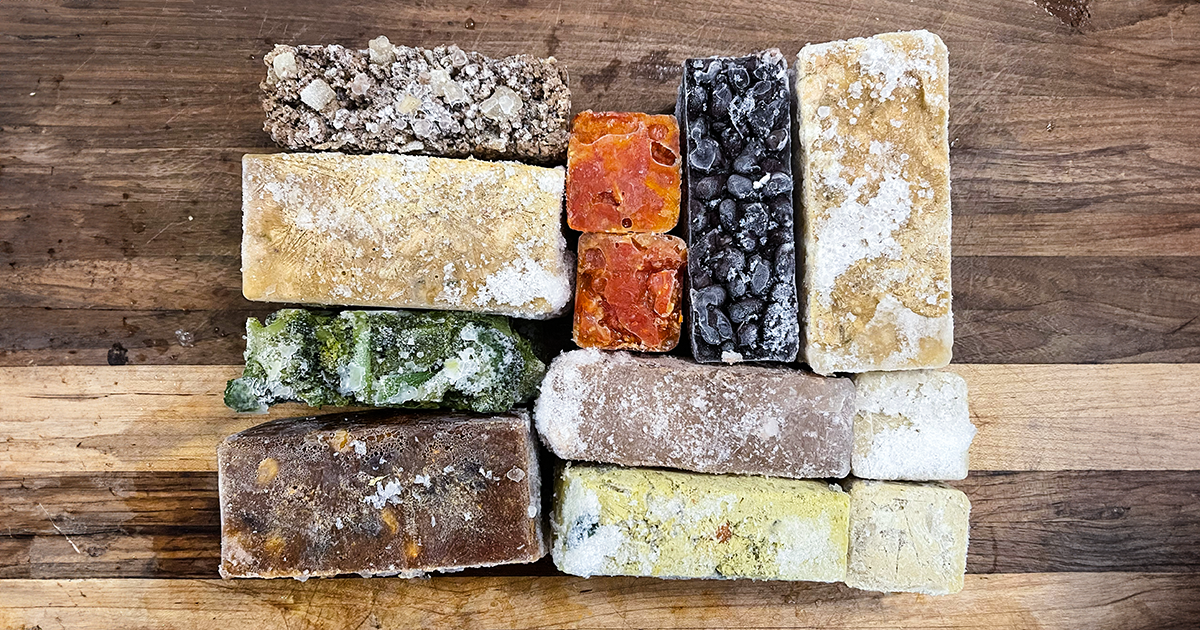
Lego lunch meal prep is the trick that finally makes meal prep click for people who hate eating the same thing twice. The idea is simple. Instead of cooking five identical lunch containers on Sunday and dreading them by Wednesday, you batch a handful of separate components, freeze them in small standardized portions, and build a different lunch each day by snapping a few of those pieces together. Protein here, a carb there, a vegetable, done. They stack in the freezer like little building blocks, and that’s exactly how you use them.
I’ve been batch cooking for ten years, and for most of them I described what I do as cooking components and freezing them in portions. Accurate, but it never quite landed when I explained it to someone. The first time I heard it called a lego lunch, it clicked, for them and honestly for me too. The word does the teaching that the long explanation couldn’t. You already know how lego works: a bin of interchangeable pieces, and you build whatever you want from what’s in front of you. Frozen food works the same way once you portion it right.
This post is about the frozen-block version specifically. Every example here is something you pull straight from the freezer and assemble, with no fresh chopping and no on-demand cooking at lunchtime. I developed the frozen block method, the system that names these components and standardizes the portions, and built the CookBlocks app to run it. Below is how the blocks work, why a small set of them produces weeks of non-repeating lunches, why they’re so satisfying to build, and how to start this week.
What is lego lunch meal prep?
Lego lunch meal prep is a way of building lunches from interchangeable frozen blocks instead of cooking from scratch or reheating one fixed dish. You batch components ahead, freeze them in standardized portions, and combine a few into a fresh lunch on demand, the way you’d build something from a bin of lego pieces. The blocks are real food: a half-cup of seasoned ground beef, a half-cup of roasted sweet potato, a half-cup of sautéed vegetables.
Each block is a finished piece. A lunch is two or three of them, heated and eaten. Because the pieces are interchangeable, no two lunches have to look alike, and nothing has to be decided in advance. That’s the difference between this and ordinary meal prep, where Sunday’s choices lock you into the same plate all week. Here, the choosing happens at lunchtime, takes about three seconds, and is different every day.
Why are the blocks so satisfying to build with?
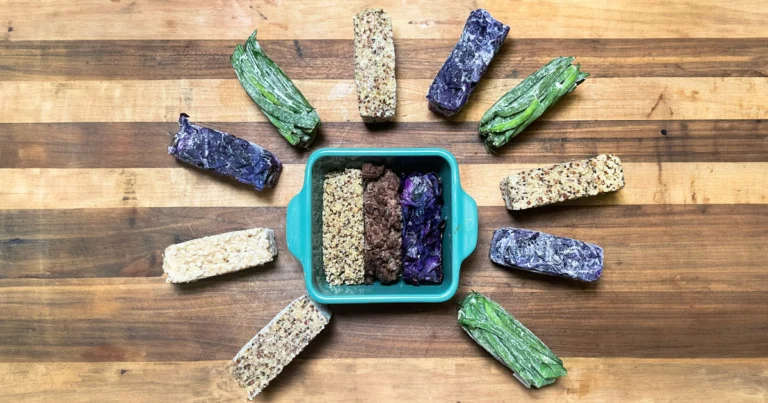
The blocks are satisfying because they turn an abstract chore into something you can see, stack, and snap together. A freezer of labeled half-cup blocks reads like a stocked shelf of building pieces, not a pile of leftovers, and pulling three to make a lunch feels closer to assembling something than to cooking. There’s a real little hit to it.
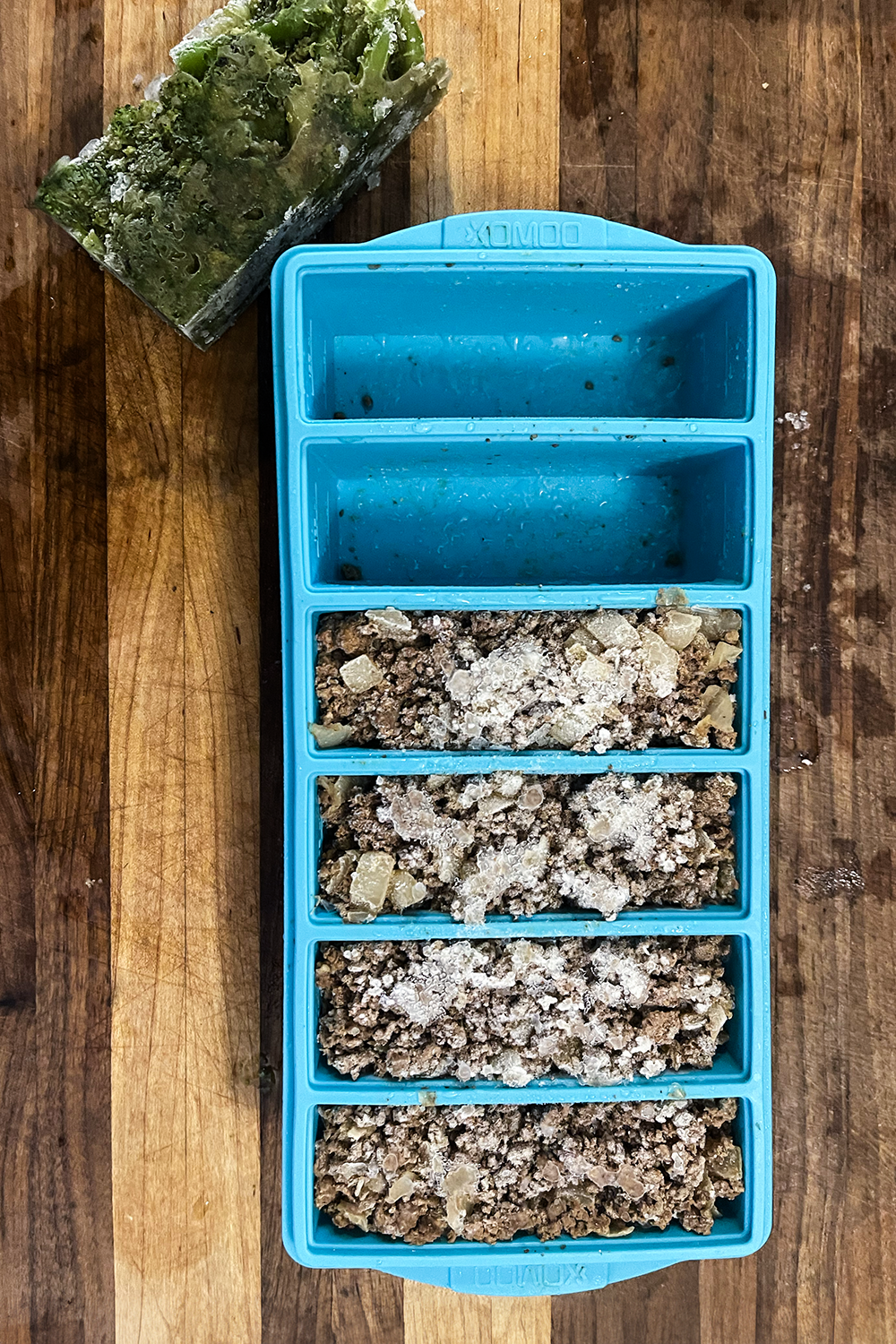
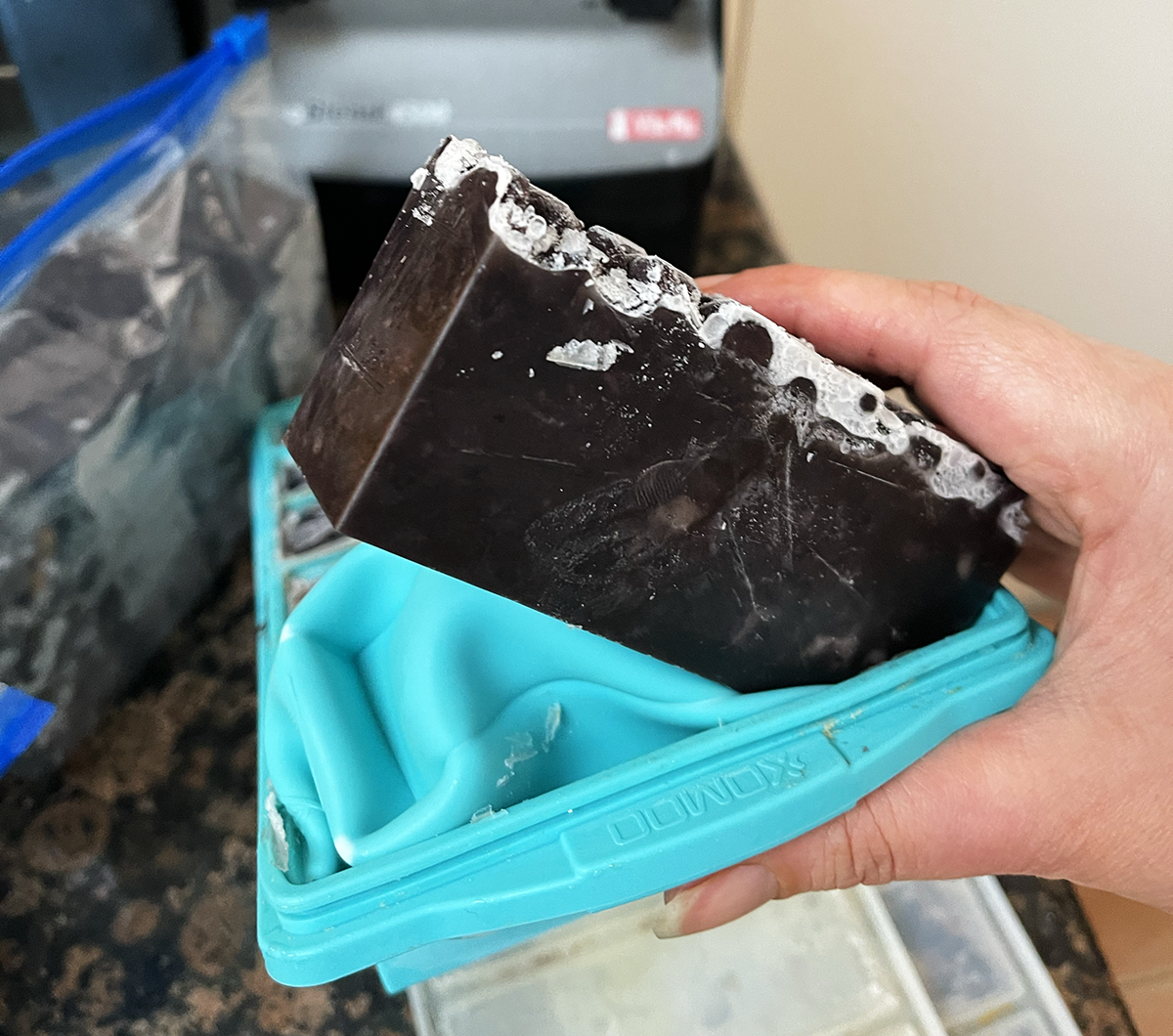
The blocks pop out of the silicone tray clean, in identical bricks, and a tray of six lined up is weirdly pleasing in a way a wall of takeout containers never is. When the freezer is stocked, every lunch is a small build with a finished result, and you can see at a glance that future-you is taken care of. That feeling is the part that kept me running this for ten years: most meal prep fails quietly out of boredom, and this one is hard to dread when the freezer looks like that. The satisfaction isn’t a bonus on top of the system, it’s the thing that makes the habit stick.
How does the frozen block method turn lunch into a lego build?
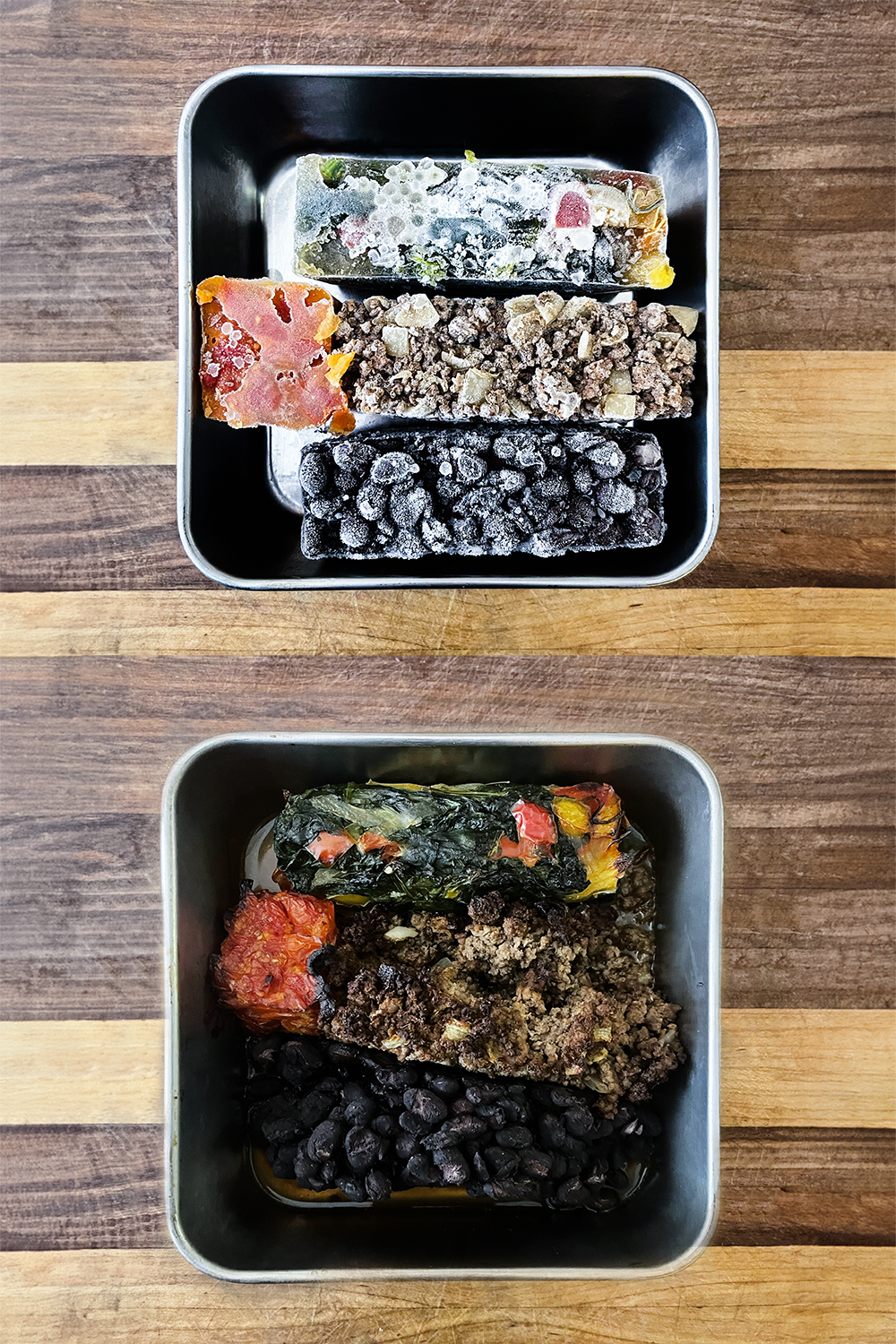
The frozen block method sorts everything you batch into five categories and gives you one rule for lunch: pull one protein, one carb, and one vegetable, heat them, eat. Three pieces snapped together is a balanced plate, with no recipe and no planning. The five categories are the whole vocabulary of the system:
- Protein – ground beef, chicken, tofu, anything that anchors the plate.
- Carbs – sweet potato, rice, beans, quinoa.
- Vegetables – a mixed sauté, or any single vegetable you batch on its own.
- Meals – complete dishes like chili or curry, frozen as their own bigger block.
- Smoothies – pre-portioned packs you blend; breakfast, not lunch, but part of the same system.
Protein, carbs, and vegetables are the foundation, frozen in half-cup blocks that combine freely. A protein plus a carb plus a vegetable is the shape of a balanced plate, the same protein, grain, and vegetable split the USDA’s MyPlate recommends, so the rule keeps you fed properly without tracking anything. The only way to get it wrong is to pull three pieces from the same category. Three carbs isn’t a lunch; one from each, and the balance takes care of itself.
Why does a handful of blocks make weeks of lunches?
A small set of blocks makes a surprising number of lunches because the combinations multiply. Four proteins, three carbs, and three vegetables isn’t ten blocks’ worth of lunches. It’s thirty-six different protein-carb-veg combinations before you change a single seasoning or sauce. That multiplication is the whole promise of a lego lunch: a finite bin of pieces, a huge number of builds.
Even a starter freezer with two proteins, two carbs, and two vegetables gives you eight distinct lunches, which is already more variety than most people get from a week of identical containers. Beef, sweet potato, and the mixed vegetable sauté one day. Beef, black beans, and napa cabbage the next. Chicken, sweet potato, and sauté after that. Add one new block and you don’t add one lunch, you add a whole new row of combinations, which is why a stocked freezer never feels repetitive even though you only batched six or seven things.
Which blocks should you keep on hand for lego lunches?
Start with one protein, one carb, and one vegetable, then grow from there. That’s the smallest set that makes a real lunch. My freezer usually runs two proteins (a warm-spice ground beef and Sicilian chicken bites), a couple of carbs (sweet potato and black beans), and the signature mixed vegetable sauté of onions, peppers, mushrooms, and spinach.
The one piece of gear that matters is a half-cup silicone freezer tray. The portion and the clean pop-out both come from the tray, not from anything fancy. I use Souper Cubes, and every block I make is sized for their half-cup tray, but any half-cup silicone tray works the same way. The brand isn’t sacred; the standardized half-cup portion is. For the full roster of components that freeze well and the recipes behind each block, my souper cubes recipes post is the deep list. Here, the point is just the starter set: a few interchangeable pieces is enough to begin.
How do you heat and store a lego lunch?
Reheating is the easy part. Pull the blocks you want, heat them through like any leftover, and lunch is ready in a few minutes. Everything was already cooked before it went into the freezer, so you’re only warming it back up, never starting from scratch.
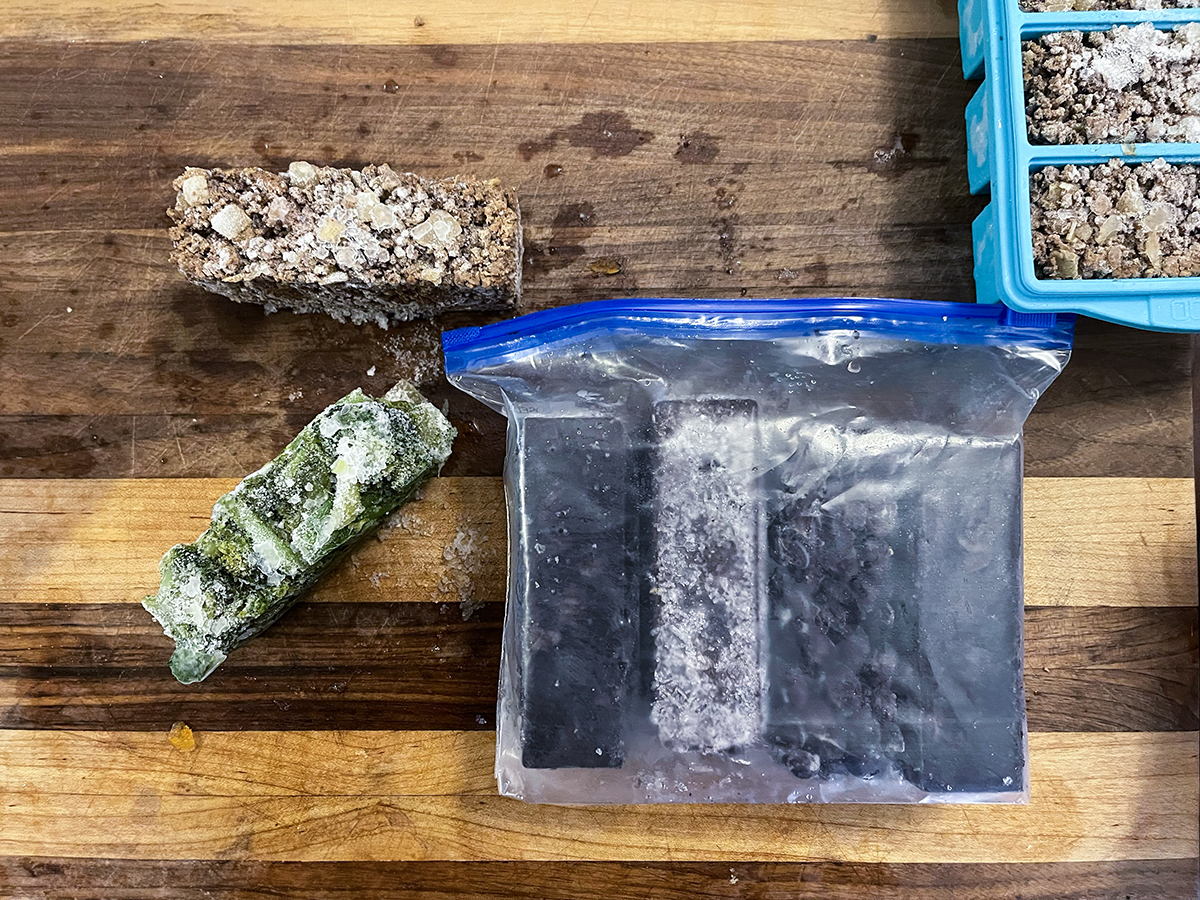
If you eat away from a kitchen, pull the blocks into a container ahead of time and heat them wherever you land; a small personal steam cooker is a handy option when there’s no microwave around. For storage, pop the frozen blocks out, bag them by type, and label each bag with the contents and date, because a frozen brick of beef and a frozen brick of chili look identical at noon. Bagged at 0°F, the blocks keep their quality for about three months and stay safe well beyond that, per the USDA. My honest rule is to eat through them within six months and you won’t taste a difference.
What are the most common lego lunch mistakes?
The most common lego lunch mistake is pulling blocks from only one category. Three carbs, or two proteins and a carb, isn’t a balanced lunch. Build one protein, one carb, and one vegetable, and the balance is automatic. After that, the usual slip-ups are about storage and batching the wrong things.
Label every bag before it goes in the freezer, because unlabeled blocks all look alike once they’re solid. Don’t over-invest in complex meal blocks at the expense of the foundation, since proteins, carbs, and vegetables are what actually feed you day to day and a freezer full of curry leaves you nothing to build from. And keep most blocks seasoned neutral, salt and pepper as the floor, so a sauce can steer them later. Season every block hard toward one cuisine and you quietly kill the variety that makes lego lunches worth doing.
Frequently asked questions
Frequently asked questions
What is a lego lunch?
Is lego lunch just for kids?
How many blocks do you need for a week of lunches?
Do you need Souper Cubes for lego lunch meal prep?
How long do the blocks last in the freezer?
How is lego lunch meal prep different from regular meal prep?
Conclusion
A lego lunch isn’t a new recipe. It’s a new way to think about food you already make. Cook a few components, freeze them as standardized blocks, and let the combinations do the work, and lunch stops being a daily decision and becomes a quick build from pieces you can see. The satisfaction is real: a freezer of clean, labeled blocks that future-you gets to assemble in minutes, and a system that’s easy to keep up precisely because it’s nice to look at. Start with one protein, one carb, and one vegetable this week, and you’ll have a workweek of lunches that never repeat. If you want the full system the blocks sit inside, my complete guide to batch cooking walks through how it all fits together.
Start this Sunday
Summarize the key takeaway, connect back to the block system if relevant, and point to one clear next step.
Get the Playbook →Pin this lego lunch meal prep system


Be the first to leave a comment