
How to Use Souper Cubes
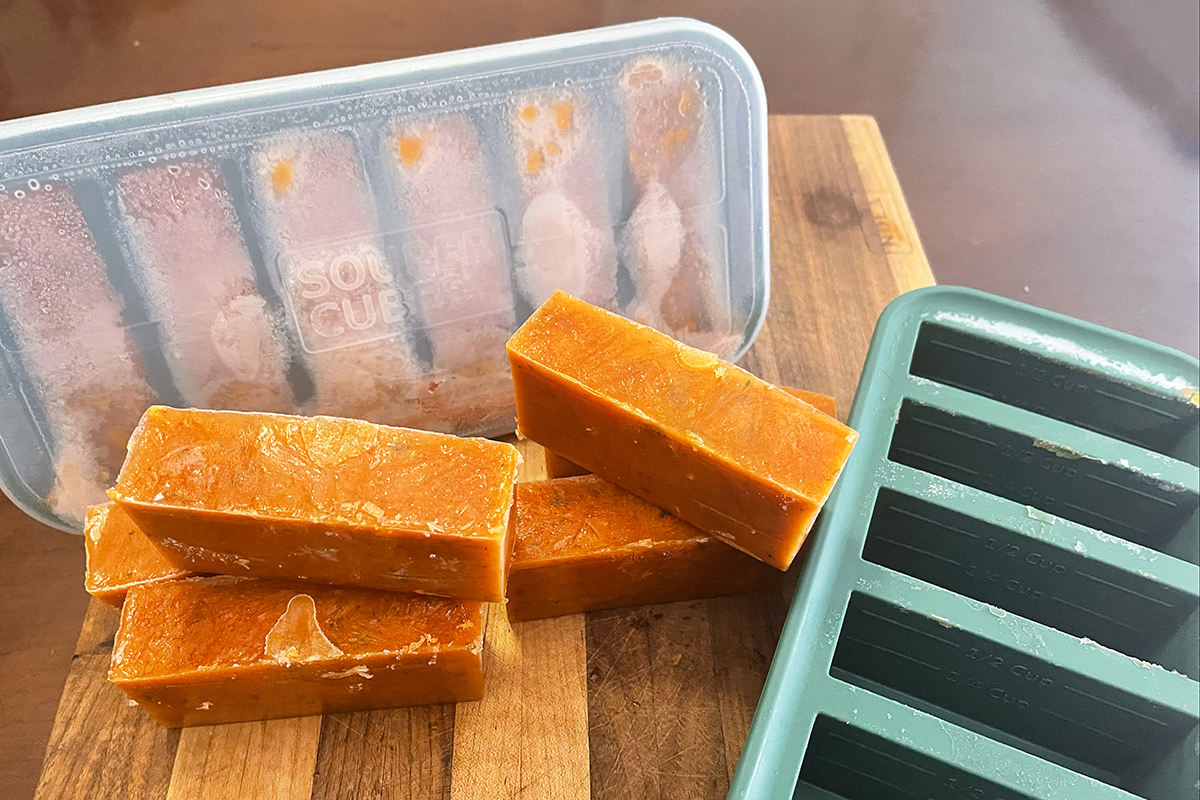
Using Souper Cubes comes down to a short routine, not a feature list: fill the silicone cavities to the line, let the food cool, freeze it solid, pop the blocks out, then bag and label them. The half-cup tray is the workhorse for protein, carb, and vegetable components, and three half-cup blocks make a balanced dinner in about 30 minutes at 350°F. The one-cup tray is for full meals like soup and chili. The trays are oven-safe to 415°F (the lids are not), and the blocks hold their quality for months once they are bagged and sealed. The trays are just the gear. The system that turns blocks into dinners is the frozen block method, free in the Frozen Block Method Playbook.
On this page
- TL;DR
- What are Souper Cubes, and what are they actually for?
- How to use Souper Cubes, step by step
- Which Souper Cubes size should you buy?
- What can you freeze in Souper Cubes, and what does not work?
- How do you reheat Souper Cubes, and are they oven-safe?
- What mistakes do people make with Souper Cubes?
- Frequently asked questions
- Conclusion
- Start this Sunday
TL;DR
Using Souper Cubes comes down to a short routine: fill the silicone cavities to the line, let the food cool, freeze it solid, pop the blocks out, then bag and label them. The half-cup tray is the workhorse for protein, carb, and vegetable components, and three half-cup blocks make a balanced dinner in about 30 minutes at 350°F. The one-cup tray handles full meals like soup and chili. The trays are oven-safe to 415°F (the lids are not), and blocks keep their quality for months once bagged and sealed. The trays are the gear; the system that turns blocks into dinners is the frozen block method, free in the Frozen Block Method Playbook.
I bought my first set of Souper Cubes years before I actually used them. They sat in a drawer because I thought they were for one thing: freezing the extra soup I did not want to pour down the drain. So if you are standing in your kitchen wondering how to use Souper Cubes for more than the occasional batch of leftover broth, I want to save you the years I lost. The trays are not a soup gadget. They are how you freeze real, whole meals in portions that pop out clean and stack like bricks.
What changed for me was not the tray. It was realizing I could freeze a protein, a carb, and a vegetable as separate blocks, and that three of them stacked together made a full, balanced dinner I could pull on a Tuesday when I had nothing left to give. The tray is the one piece of gear that whole habit runs on, because it does the portioning for you, every single time, without a measuring cup.
This is the hands-on guide to the trays themselves: filling them, freezing them, getting the blocks out, storing them, and reheating them, plus which size to buy and the few mistakes that trip people up. It is not the full system. That lives in the free Frozen Block Method Playbook. This is just how to actually use the trays sitting on your counter.
What are Souper Cubes, and what are they actually for?
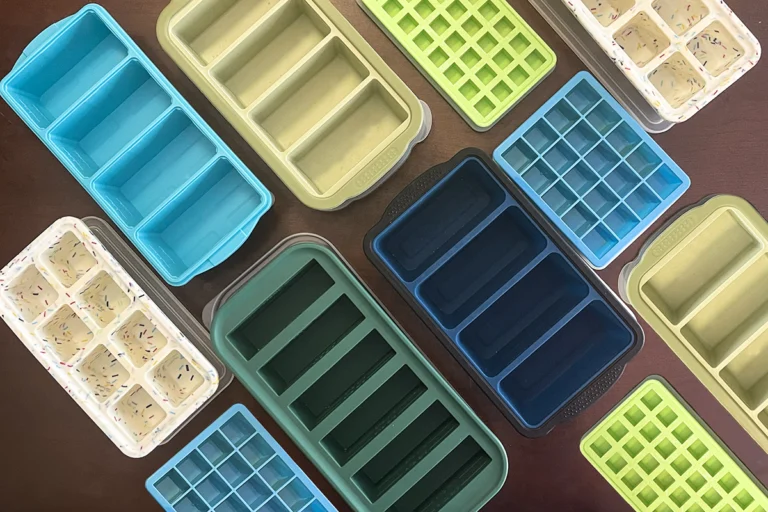
Souper Cubes are silicone freezer trays with measured cavities, a steel rim, and a snap-on lid, made for freezing food in standardized portions that pop out as solid blocks. They come in a few sizes (quarter-cup, half-cup, one-cup, and two-cup), and the thing that makes them more than an oversized ice cube tray is the portioning. Each cavity is a known amount, marked with a fill line, so a block is always the same size. That consistency is the whole point.
The name comes from soup, and that is where most people stop, including me for an embarrassingly long time. But the trays freeze far more than soup: cooked ground beef, shredded chicken, sweet potato, beans, a vegetable saute, chili, curry, smoothie portions. Anything that freezes well freezes well in these. Treating them as a soup-only tool is the single biggest reason people own a set and barely touch it.
A few things make Souper Cubes specifically nice to use. The walls are thick and the cavities carry printed fill lines, so the blocks hold their shape and you never have to guess how much to spoon in. The lid is solid and snaps on cleanly, which matters more than it sounds once you start stacking trays. They are also just satisfying to use, which is a small thing that turns out to keep you doing it. Whether those nicer touches are worth the higher price over a cheaper tray is its own question, and I worked through it in are Souper Cubes worth it.
To be straight about it, freezing food in portioned components is not something Souper Cubes invented, and neither did I. People have frozen meals in containers forever. What Souper Cubes did was popularize the portioned silicone tray and make the blocking effortless, and what I did was build a system around it. Being honest about that is the point, not a footnote.
How to use Souper Cubes, step by step
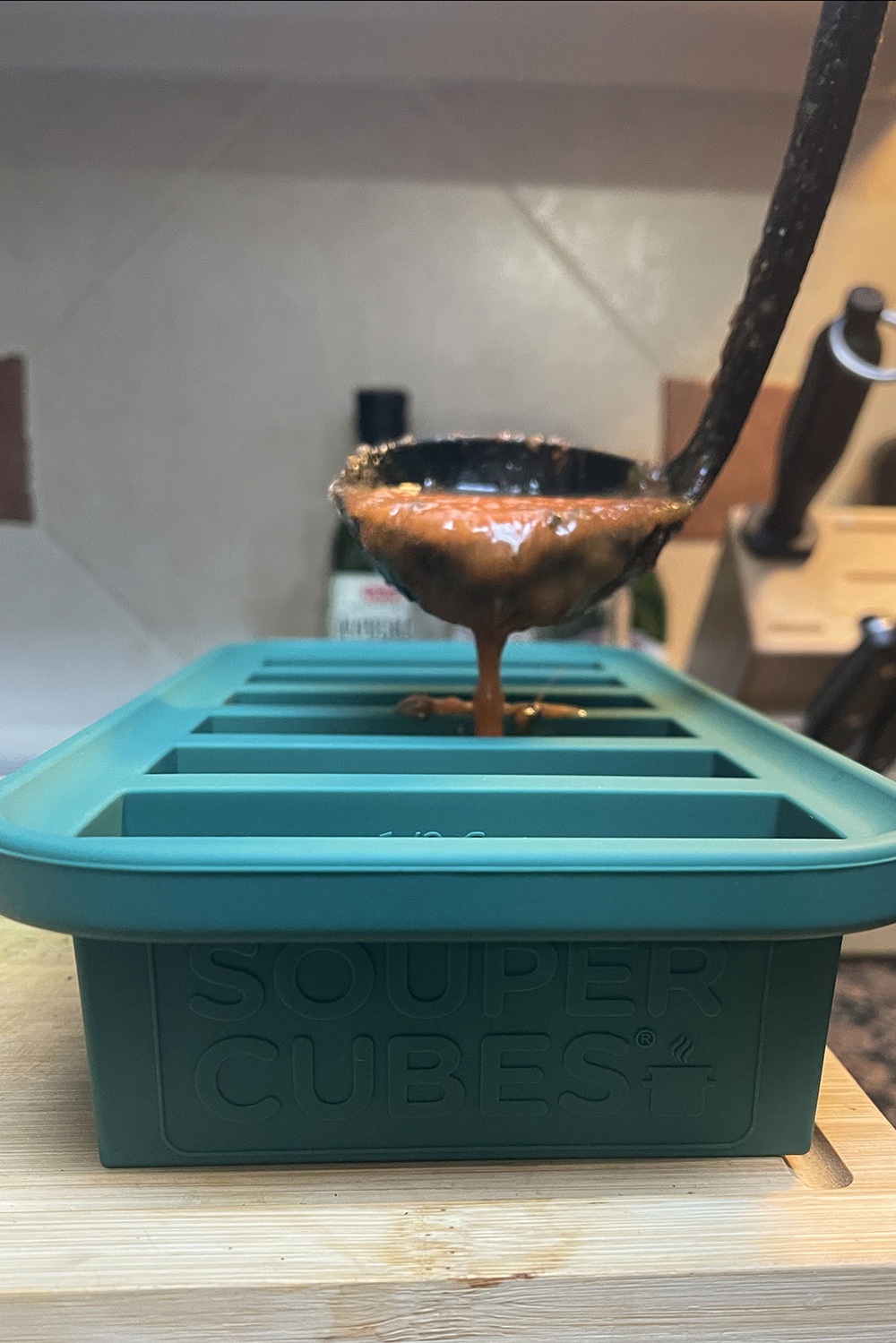
You use Souper Cubes in one repeatable loop: spoon cooked food into the cavities up to the fill line, let it cool, freeze it solid, pop the blocks out, then bag and label them so the tray is free for the next batch. That is the entire routine. Once it is muscle memory, a tray of anything takes about two minutes of handling on either end of the cooking.
Start by filling. Spoon your cooked food into each cavity and press it gently to the fill line, not over it. Overfilling is the most common first-timer mistake, and it makes the lid sit wrong and the blocks freeze unevenly. You can put hot food straight in, but leave the lid off and let the tray cool to room temperature before it goes in the freezer, so it does not thaw whatever it is sitting next to. A full tray can take up to 24 hours to freeze solid, so give it the time.
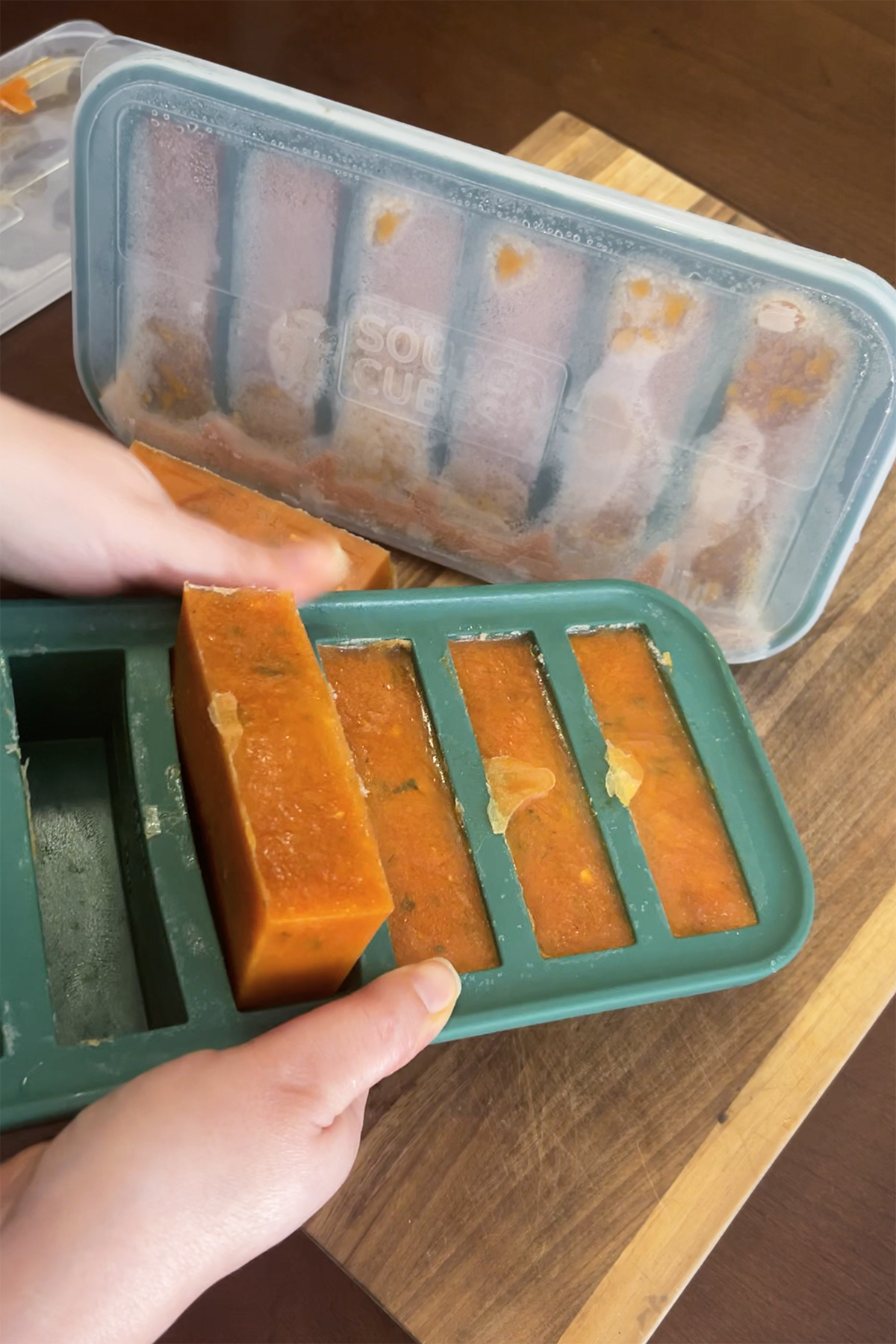
Once the blocks are frozen hard, pop them out. The thick silicone flexes, so a push from underneath releases each one clean. If a block does not want to budge, leave the tray on the counter for three to five minutes first. A little thaw at the edges is all it takes, and you will never have to pry.
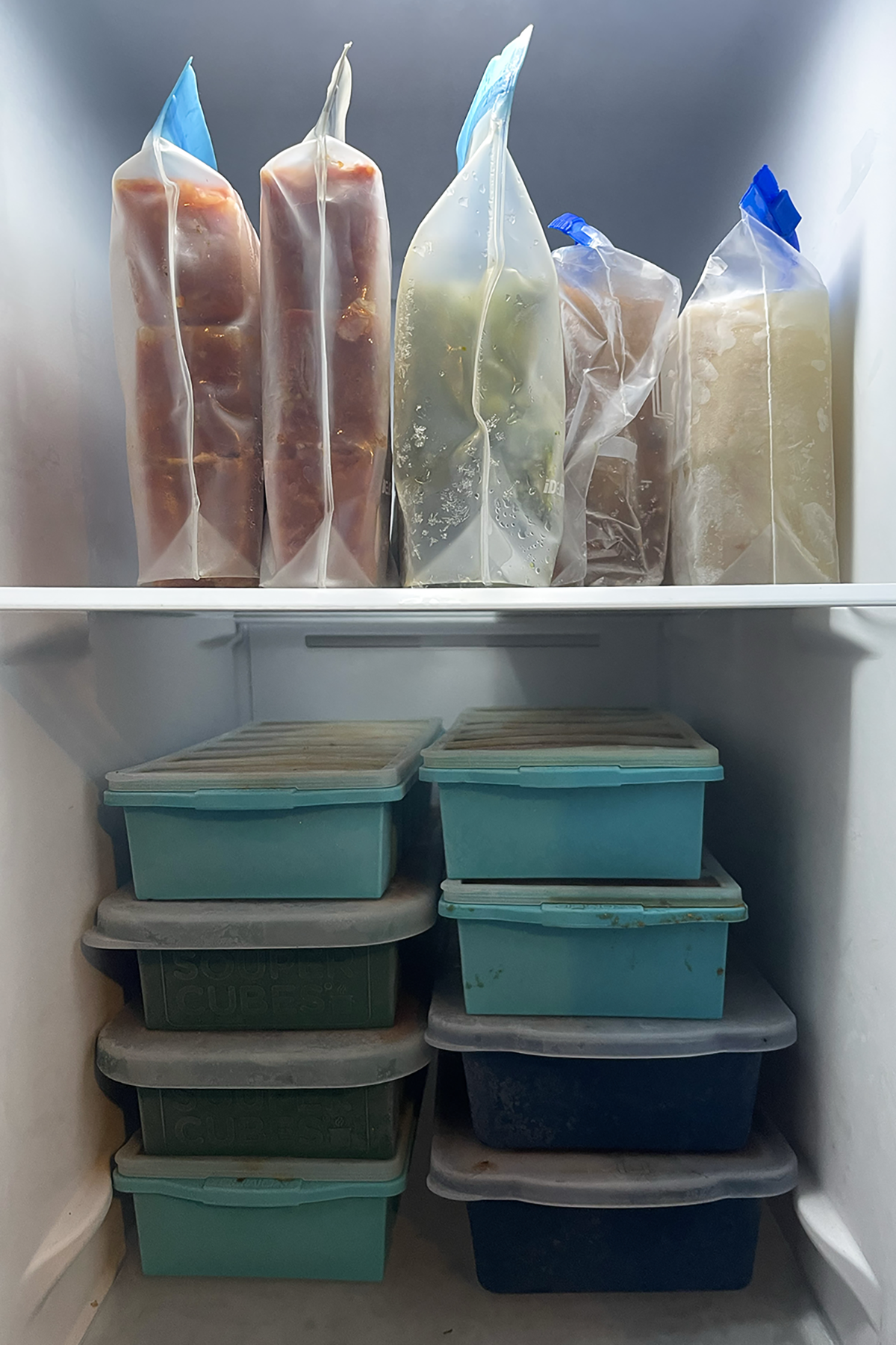
Then bag them. I move blocks into freezer bags by type: four half-cup blocks fit a quart bag side by side, or about eight to a gallon bag for bigger batches. Label every bag with the contents and the date before it goes in, because a frozen brick of beef and a frozen brick of chili look identical at six o’clock. Sealed and frozen at 0°F, the food stays safe indefinitely and holds its best quality for the first few months.
Getting the blocks out of the tray and into a bag is the step people skip, and it is worth doing every time. It frees the tray to go back to work, keeps the blocks from drying out, and is why most people end up owning two or three trays within a few weeks.
Which Souper Cubes size should you buy?
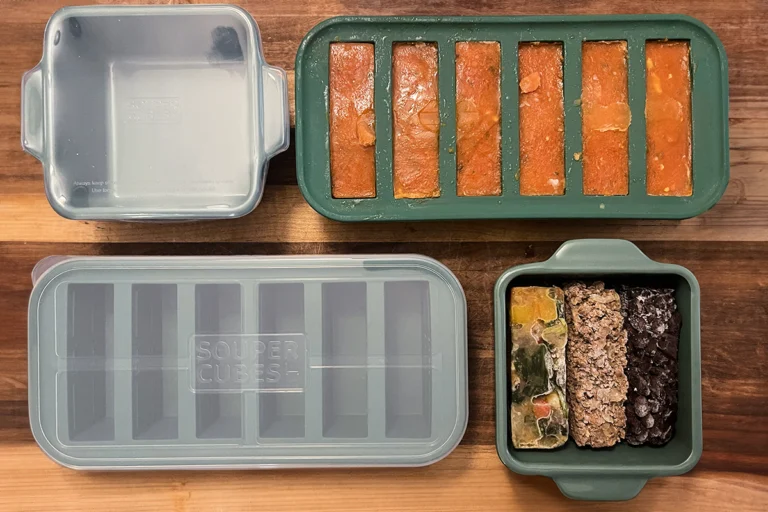
Start with the half-cup tray. It is the workhorse, six cavities per tray, and it is the right size for the foundation components you combine into meals: a half-cup block each of protein, carb, and vegetable is a balanced plate. For me, three of those blocks lands around 500 to 650 calories without my ever counting, because the portion does that work for me. If you only buy one tray, buy this one.
Add the one-cup tray when you start freezing full meals. Soups, stews, chili, and curry go here, four cavities per tray, because a complete dinner needs more than a half-cup. A one-cup meal block stands on its own, or you stretch it by adding a foundation block or two alongside it.
The quarter-cup size is for smoothie portions, and it is worth knowing Souper Cubes does not make that one, so it is a separate silicone tray if you go that route. Souper Cubes does make a two-cup tray, often pitched for layered meals like lasagna, but I skip it. A two-cup block is dense and harder to reheat evenly, and I would rather pull two one-cup blocks. One tray is genuinely enough to start. The collection grows on its own once the habit sticks.
What can you freeze in Souper Cubes, and what does not work?
Most cooked components and full meals freeze beautifully in Souper Cubes, but a few things do not, and knowing the exceptions saves you a sad dinner. The reliable winners are proteins like seasoned ground beef and chicken, slower carbs like sweet potato and beans, a mixed vegetable saute, and one-pot meals like chili, soup, and curry. If it holds up to being frozen and reheated, the tray makes it portionable.
The clearest miss is plain pasta. It comes out soft and a little defeated after freezing, so I cook it fresh at reheat, which only takes ten minutes anyway. Mac and ramen noodles are the same. High-water vegetables like zucchini and summer squash are the other trap: frozen raw, they go mushy, so roast them hard first or keep them as a fresh add. And cream-based sauces can split if you blast them on reheat, so those want a gentle warm-up rather than a hot oven.
What goes in the blocks is really its own subject, and it is the fun part. Our Souper Cubes recipes guide covers thirty-plus ideas by category, plus the combinations that turn cubes into actual dinners. Here I am staying on the trays themselves.
How do you reheat Souper Cubes, and are they oven-safe?
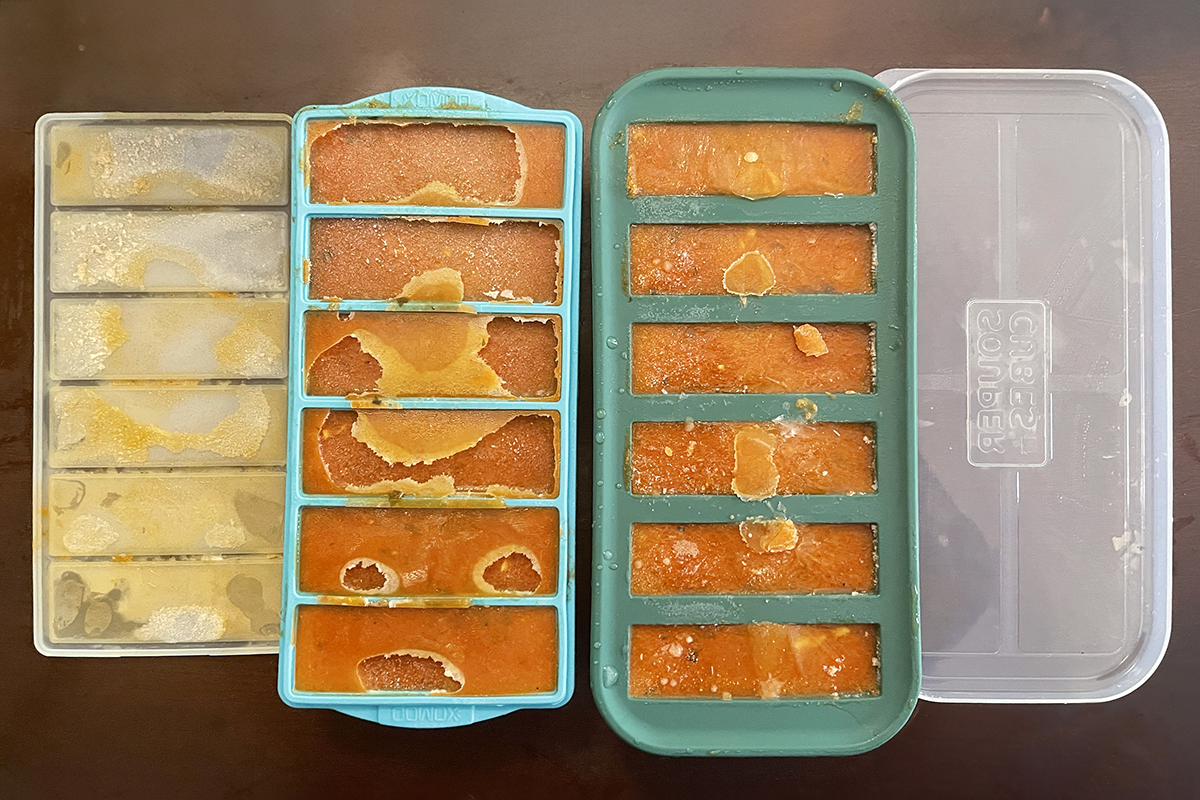
To reheat, pop the block out of the tray and warm it from frozen in a separate oven-safe dish, about 30 minutes at 350°F in a toaster oven or regular oven. That is my everyday method, and it is why the pop-out-and-bag habit matters: the block reheats in a dish, and the tray stays free for the next batch. For a balanced dinner I will reheat a protein, a carb, and a veg block together, and add a finishing layer once they are hot.
Yes, the trays are oven-safe up to 415°F, though the plastic lids are not. So technically you can reheat or even bake a block right in the tray. Some people use the cavities as molds to bake things like banana bread or single-serve egg bites, and if that appeals to you, the trays can do it.
I do not, partly because I would rather keep the tray in rotation, and partly because I am just not a fan of baking with silicone. Capability and personal habit are two different things, and I would rather tell you both than pretend my way is the only way.
One hard no: do not microwave the tray itself, because the steel rim is not microwave-safe. If you want to microwave a block, pop it out first and heat it on a plate. For the oven or toaster oven the silicone is fine; for the microwave, the food comes out and the tray stays behind.
What mistakes do people make with Souper Cubes?
The mistakes are few and easy to fix, which is the good news: these trays are genuinely simple to use. The first is overfilling, and the fix is built into the product. The cavities are printed with fill lines, so fill to the line and the blocks come out even and the lid seats right.
The second I learned the hard way: bumping the tray against something solid in the freezer before the blocks have set. A tray of soft food wedged against a frozen item comes out dented, and while a deformed block tastes exactly the same, uniform blocks are the ones that slide four-to-a-quart-bag and stack cleanly in the drawer. The fix is to give the tray a flat, undisturbed spot to freeze. Thick walls help here too, which is part of why Souper Cubes blocks hold their shape better than thin generic ones.
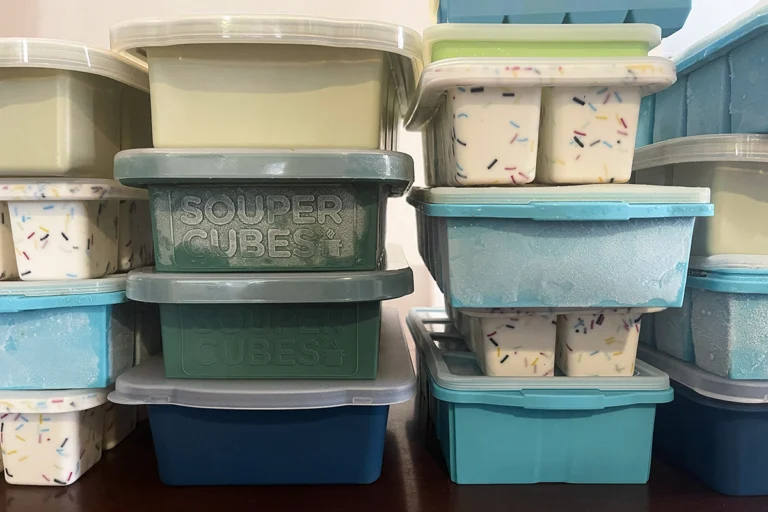
The third is the most consequential: leaving the food sitting in an open tray instead of popping it out and bagging it. Two things go wrong when you do. The food slowly dries into freezer burn, and a tray full of last week’s chili cannot make this week’s beef. With the lid on, a tray does hold off freezer burn for about three to four months, so short stints are fine, but the better habit is to pop the blocks out, seal them in a freezer bag (vacuum-sealed if you have it, for anything you are keeping a while), and label it.
That one move solves storage, freezer burn, and tray-shortage at once. None of this is hard. It is a handful of habits, and the trays do most of the work.
Frequently asked questions
Frequently asked questions
How do you use Souper Cubes?
Can you put hot food in Souper Cubes?
How long do Souper Cubes blocks last in the freezer?
Are Souper Cubes oven-safe?
Do you have to take the blocks out of the tray to store them?
How do you clean Souper Cubes?
Conclusion
That is really all there is to how to use Souper Cubes: fill to the line, cool, freeze, pop out, bag and label, and reheat from frozen. The trays handle the portioning so you do not have to think about it, the half-cup size carries most of the work, and the few mistakes are easy to sidestep once you know them. What turns a freezer full of blocks into easy weeknight dinners is not the tray, though. It is the system that runs on it. The trays are the gear; the frozen block method is how you actually use them to eat well without cooking every night, and the full system is free in the Frozen Block Method Playbook.
Start this Sunday
Summarize the key takeaway, connect back to the block system if relevant, and point to one clear next step.
Get the Playbook →How to use Souper Cubes: the simple guide

Be the first to leave a comment