
The Complete Guide to High-Protein Freezer Meal Prep
High-protein freezer meal prep built to hit your protein number: how to portion blocks, which proteins freeze best, the per-block math, and a starter rotation.
On this page
- TL;DR
- What is high-protein freezer meal prep?
- Why build your freezer around protein?
- How do you hit your protein number with blocks?
- Which proteins freeze and reheat best?
- What’s the best high-protein freezer rotation to start with?
- How long do high-protein freezer blocks last?
- What mistakes should you avoid with high-protein freezer prep?
- Frequently asked questions
- Block one protein this weekend
TL;DR
High-protein freezer meal prep is freezer batch cooking built to hit a protein number, meal after meal. You cook protein in bulk, freeze it in standardized half-cup blocks, and combine a protein block with a protein-carrying carb to clear 30 or more grams per plate, counting blocks instead of grams at dinner. Lean meats freeze and reheat best when they go in shredded, saucy, or marinated. I leave fish out of the freezer, but shrimp is a clean, high-protein exception worth keeping on hand.
Protein is the lever I’d been under-using. Eating enough of it is what moves the needle on building muscle and on losing weight, and most days the thing standing between me and enough protein wasn’t knowledge. It was energy. At 6:45 on a Tuesday, “cook a chicken breast” is a tall order.
The unlock was having an on-demand source of meat. Once there’s a bag of ground beef blocks in the freezer – portioned, frozen, ready in 30 minutes – hitting a protein number stops being a daily act of willpower and becomes a pull from the freezer. That’s the whole idea behind this guide. Ground beef is my personal go-to, but the system works the same for bison, turkey, chicken, and a few smart plant proteins.
I’ve been batch cooking for ten years, long enough to build a system around it – the frozen block method – and I’m building an app to run that. This guide is the high-protein layer on top of that system: how much protein you actually need, how to hit it by counting blocks so you do the math once instead of every night, which proteins survive a freeze and a reheat, and a starter rotation you could cook this weekend. If you want the foundation underneath it – the five categories and one combining rule – that lives in the complete guide to batch cooking. Here we’re building it out for protein.
What is high-protein freezer meal prep?
High-protein freezer meal prep is the same freezer batch cooking I do for every meal, with one extra rule layered on: every plate has to clear a protein target. You cook proteins and components in bulk, freeze them in standardized portions, and build meals from the freezer – but you build them so the protein lands first, not as an afterthought.
The difference from regular freezer prep is subtle but it changes what you cook and how you portion. Ordinary freezer prep asks “what’s for dinner?” High-protein freezer prep asks “did this plate hit 30 grams?” The answer comes from how you stock the freezer in the first place: more protein blocks, carbs chosen for the protein they carry, and consistent portions so the numbers stay honest.
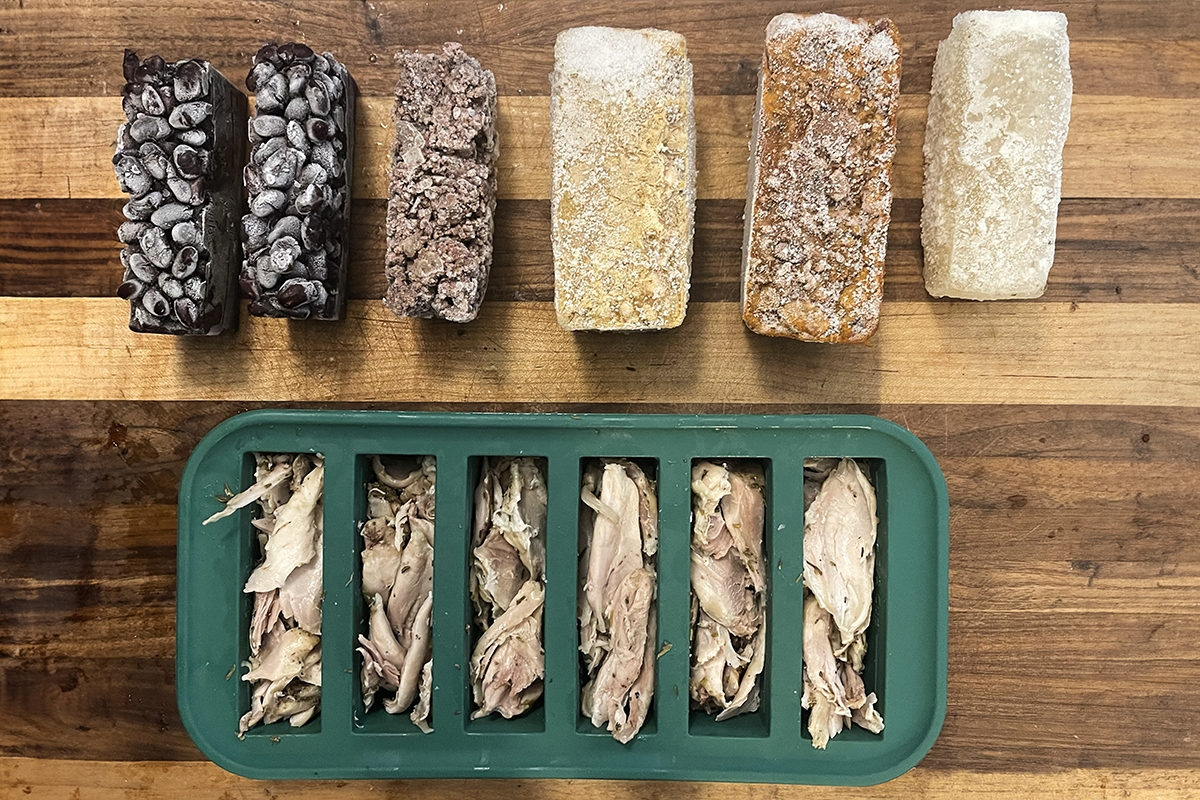
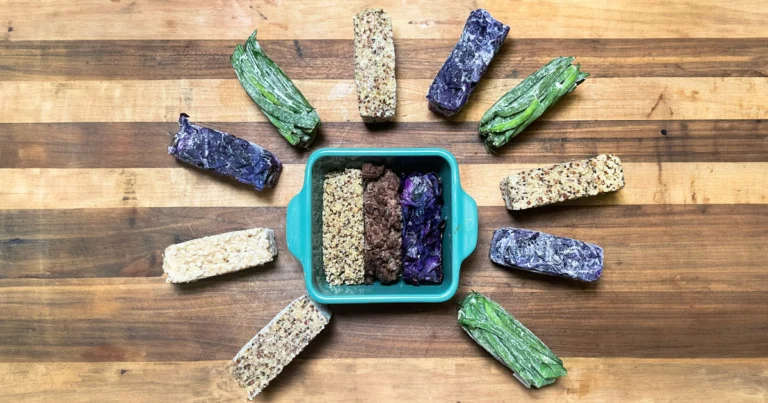
It runs on the frozen block method, which I use for everything: standardized frozen blocks of food, portioned to combine into balanced dinners. The full system is five categories and one combining rule, and it’s free in the Frozen Block Method Playbook. For our purposes here, the part that matters is the foundation: a protein block, a carb block, and a vegetable block, each a half cup, that you stack into a meal. High-protein prep is just that system pointed at a number.
Why build your freezer around protein?
Because protein is the one macronutrient that pays you back twice – it builds and protects muscle, and it keeps you full enough to actually eat less without feeling like you’re white-knuckling it. If you’re going to make one thing reliably available in your freezer, protein is the thing that earns the space.
Protein builds and holds muscle
The International Society of Sports Nutrition puts the daily target for building and maintaining muscle at 1.4 to 2.0 grams of protein per kilogram of body weight. The number that surprised me when I first read it is what happens during weight loss: the same position stand recommends 2.3 to 3.1 grams per kilogram to hold onto lean mass while you’re in a calorie deficit. In other words, when you’re eating less, you need more protein, not less – it’s what keeps the weight you lose from coming off your muscle.
Protein helps with weight loss
A review in the American Journal of Clinical Nutrition found that higher-protein diets during weight loss produced greater weight loss, more fat loss, and better preservation of lean mass than lower-protein versions of the same diet, plus a modest bump in fullness. That last part is the quiet reason high-protein prep works long-term: a plate built around protein keeps you satisfied, which makes the whole thing easier to stick with than a freezer full of food you don’t actually want to eat.
How much protein do you need per meal?
You don’t hit your daily protein in one sitting – you spread it across meals. The simple version, and the one I’d start with: aim for about 30 grams of protein per meal. The research points to a 20-to-40-gram range per meal, with 25 to 30 grams as the floor where the muscle and fullness benefits reliably kick in. Hit roughly 30 a plate across three meals and you’re in good shape, no math required.
If you want a number tailored to you, work back from your bodyweight. The ISSN range above is 1.4 to 2.0 grams of protein per kilogram of bodyweight per day for building or holding muscle, and 2.3 to 3.1 grams per kilogram if you’re losing weight and want to protect it. Take your weight in kilograms (pounds divided by 2.2), multiply by the figure that fits your goal, and divide across your meals. For a 70-kilogram (155-pound) person building muscle, that’s roughly 100 to 140 grams a day, or about 30 to 45 grams across three or four meals. Both roads lead to the same plate – one built around a real protein block – so use whichever number you’ll actually stick with.
How do you hit your protein number with blocks?
You hit it by counting blocks instead of re-running the numbers every night. Once you know roughly how much protein each kind of block carries, a plate becomes simple arithmetic you can do with the freezer door open: a meat block plus a protein-carrying carb clears 30 grams, and you’re done thinking about it. Those numbers stay reliable as long as your blocks are portioned consistently – more on that below.
What each block is worth
These are approximate values for a filled half-cup block, built from USDA FoodData Central figures. Treat them as give-or-take a couple of grams, since your blocks might run a little bigger or smaller and fattier meat carries slightly less protein per portion.
| Filled half-cup block (cooked) | Approximate protein | Counts as |
|---|---|---|
| Ground beef (90/10) | 17–20 g | Protein |
| Ground bison | 18–20 g | Protein |
| Ground turkey (93/7) | 18–20 g | Protein |
| Chicken, chopped or shredded | 20–22 g | Protein |
| Lentils | ~9 g | Carb (protein-carrying) |
| Black beans | 7–8 g | Carb (protein-carrying) |
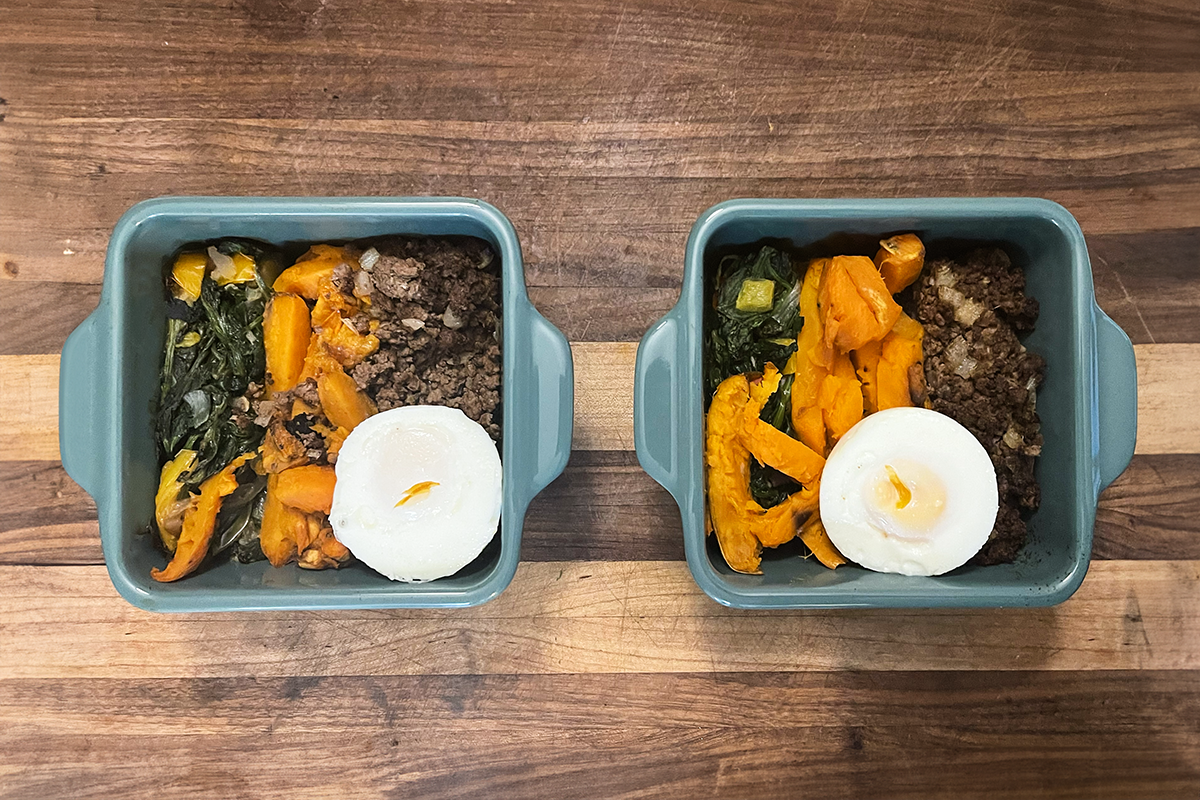
So the math writes itself. A ground beef block plus a black bean block is already around 26 grams before anything else touches the plate. A chicken block plus a bean block lands right at 30. Add a vegetable block and a fresh topper and you’ve got a real dinner that quietly cleared your protein target – no app, no scale, no tracking. You counted blocks.
Use the tray lines for consistent portions
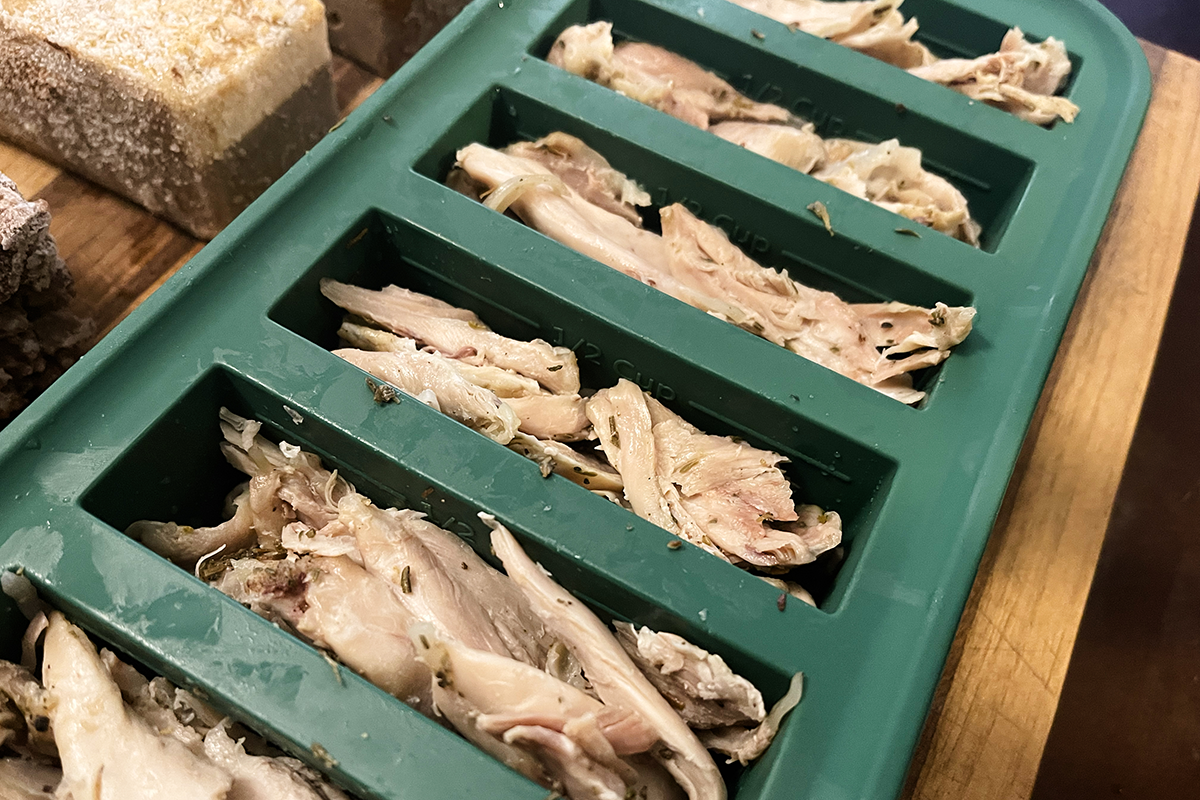
If you’re tracking calories or protein at all closely, this is where the trays earn their keep. The measurement lines printed in the cavities give you the same portion every time, so a block becomes a known quantity – the per-block protein numbers hold, and so does any calorie count you’re keeping alongside them. Fill to the line and you’re not guessing. If you’re just eyeballing dinner and not tracking anything, it matters less, but the moment the numbers matter to you, those lines are how you keep them honest without weighing a thing.
The three tiers: block it, add it fresh, or skip it
Not every protein belongs in the freezer, and sorting them into three buckets keeps the system clean:
- Block it. The cooked meats – ground beef, bison, turkey, chicken, meatballs. These freeze and reheat well and do the heavy lifting on your protein number.
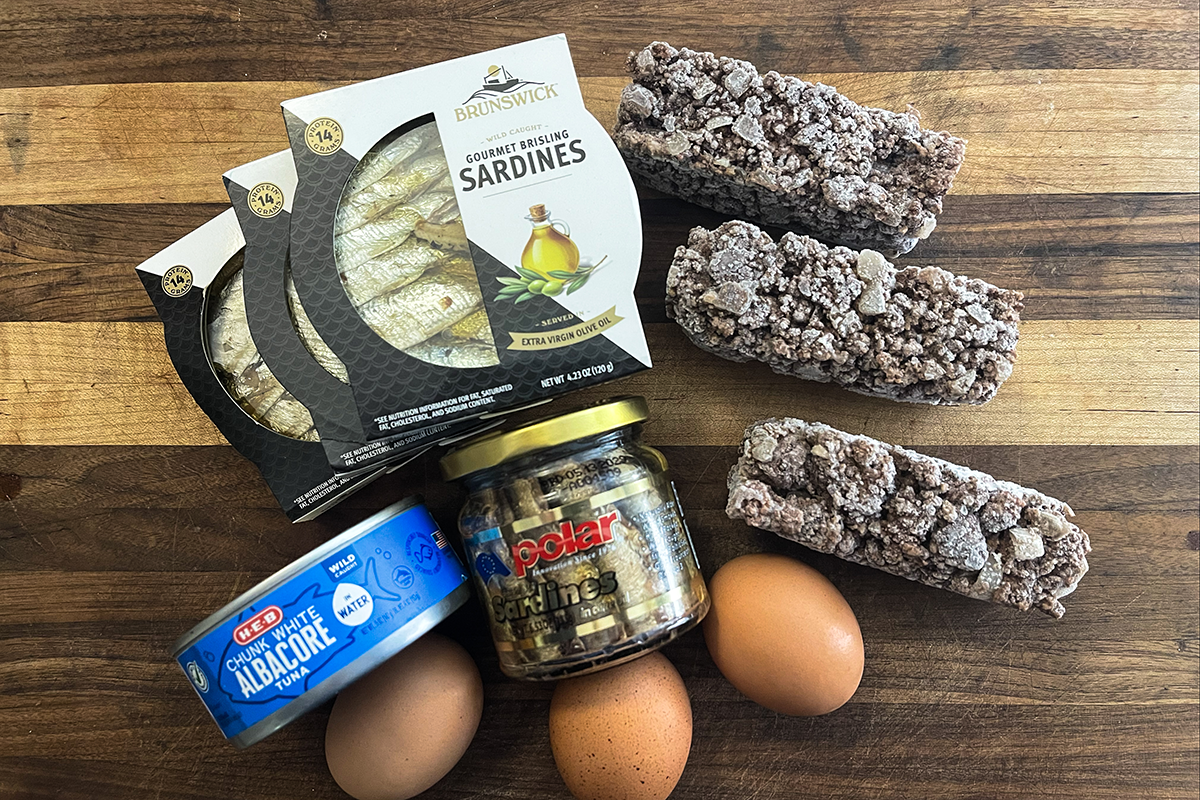
- Add it fresh, or cook it quick. Eggs, canned tuna, and sardines are toppers for a built bowl, not blocks – I don’t freeze them, I add them at the end to push a plate’s protein up without cooking. Shrimp is the one I do keep in the freezer, but as store-frozen shrimp, not a make-ahead block: it’s a clean, lean, high-protein source that cooks straight from frozen in a few minutes.
- Skip it. Cooked fish. I just don’t think fish belongs in the freezer – it doesn’t reheat into anything I want to eat. It works for some people, but it’s the one protein I leave out of the block system entirely.
Which proteins freeze and reheat best?
The proteins that survive a freeze and a reheat have one thing in common: moisture that doesn’t escape when you warm them back up. That’s why the leanest, driest cuts – the plain grilled chicken breast everyone reaches for – are the ones most likely to come back rubbery. The fix isn’t avoiding lean protein. It’s cooking it the right way before it goes in the tray.
Ground meats: the easiest win
Ground beef, bison, and turkey are the most forgiving proteins in the freezer. They cook into crumbles that take sauce and spice well, freeze flat, and reheat without the texture problems whole cuts have. Beef is my default. Bison is the one I add when I want something different – it’s a little leaner and has its own flavor, and it blocks exactly like beef does. Turkey rounds out the lean lineup. Having three interchangeable ground-meat blocks in rotation is also the cheapest insurance against flavor fatigue, which is the real reason high-protein prep falls apart: you don’t quit because the food stopped working, you quit because you got sick of the same chicken.
Ground beef with an organ blend: a nutrient upgrade
Here’s the upgrade I’ve started keeping in the rotation: ground beef cut with a small amount of organ meat – usually around 4% heart and 4% liver, sold as an “ancestral blend.” It cooks, crumbles, and blocks exactly like regular ground beef, so it slots into the freezer with zero extra effort, and the protein per block is the same. What changes is the nutrition. Organ meats are some of the most nutrient-dense food there is – liver is loaded with vitamin A, B12, and iron, and heart is rich in CoQ10. I started working a blend into my rotation recently and felt noticeably better for it, which is reason enough to keep a few blocks on hand.
One honest caveat, because it matters: liver is so concentrated in vitamin A that a full serving of straight liver can run past the adult daily upper limit the NIH sets at 3,000 micrograms, which is why a pure-liver meal is usually capped at about once a week. A 4% blend is a much gentler dose – it’s mostly muscle meat – so working a few organ-blend dinners into your week sits comfortably on the safe side. If you’re pregnant, skip liver altogether, since high retinol carries a real risk there. Otherwise, it’s a low-effort way to make your protein blocks pull double duty.
Chicken: marinate, then block
Chicken is where the texture fix matters most, and I learned it making chicken bite blocks: marinating the chicken before you cook it makes a real difference coming out of the freezer. That’s not just my kitchen talking. USDA points to the food science behind it – a salt-based marinade dissolves protein in muscle and reduces moisture loss during cooking. Less moisture lost in the pan means more moisture left to survive the freeze and reheat. The same logic is why shredded, saucy chicken beats a dry grilled breast every time in the freezer: the sauce is insurance against the dry-out. Marinate it, or shred it and sauce it, and chicken blocks beautifully.
Beans and lentils: the carb that carries protein
I file black beans and lentils under carbs, because that’s how they behave on the plate. But they carry protein that rice and sweet potato simply don’t – about 9 grams in a lentil block and 7 to 8 in a bean block. When you’re building for protein, that makes the carb slot a lever: pick the protein-carrying carb and you’ve padded the meal’s protein without adding a fourth block. A lighter meat block plus a lentil block can clear 30 grams on its own. It’s the most efficient move in the system.
What’s the best high-protein freezer rotation to start with?
Start with one or two protein blocks, not the whole lineup. The goal of your first session is to get a working stack into the freezer, not to fill it. Here’s the rotation I’d build first, all of it pulled from blocks I keep on regular rotation.
- Ground beef blocks – the workhorse, seasoned with broad spices so they go anywhere.
- Shredded chicken blocks – shredded and sauced so they reheat moist, not rubbery.
- Sicilian chicken bite blocks – marinated before cooking, which is the texture trick in action.
- Turkey meatball blocks – a lean protein that already lives in its own sauce.
- Lentil and black bean blocks – your protein-carrying carbs, filed under carb but pulling double duty.
Once that’s in the freezer, add a vegetable block or two and keep eggs and canned fish on hand for fresh toppers. That’s a freezer that can build a high-protein dinner in 30 minutes on the worst night of your week. If you want a longer list of specific meals built on this same system, capped under 500 calories for a weight-loss cut, that’s its own guide: high-protein freezer meal prep, 20 ideas under 500 calories.
How long do high-protein freezer blocks last?
Properly frozen, they’re good for months. The USDA says food stays safe indefinitely at 0°F, with quality starting to drop after about three months. My honest rule, the same one I use for every block: eat through them within six months and you’ll never notice a difference. Pop the blocks out of the tray, seal them in a labeled freezer bag, and you’ll get the full window without freezer burn.
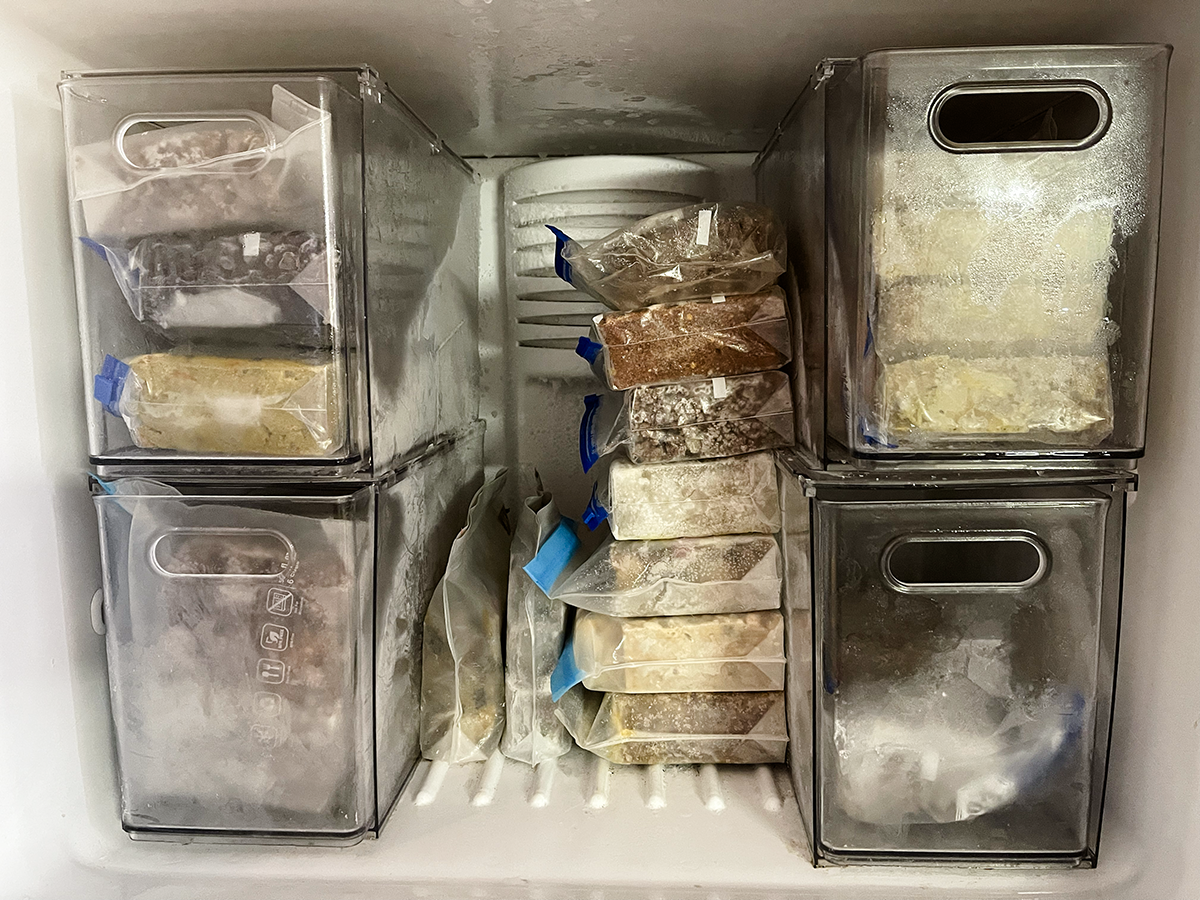
One reassurance worth stating plainly: freezing doesn’t drain the protein out of your food. The protein content of a cooked block is the same after a month in the freezer as it was the day you made it. You’re trading a little texture quality over time, not nutrition. A frozen ground beef block is every bit as much protein as the fresh batch it came from.
What mistakes should you avoid with high-protein freezer prep?
The mistakes here aren’t about cooking. They’re about the small habits that keep the protein math honest – and one or two ways people overcomplicate the whole thing.
1. Not making enough protein blocks
Protein is the block you run out of first and the hardest one to improvise at 6:45. People tend to batch a big pot of chili or a tray of veg and call the session done, then find the protein drawer empty by Wednesday. When you batch, weight the work toward protein – it’s the bottleneck for every high-protein plate, so it should be the thing you always have the most of.
2. Portioning by volume instead of protein
A half-cup block of beans and a half-cup block of beef are the same size and very different amounts of protein. The fix isn’t to weigh anything – it’s to know which blocks are protein and which are carbs that carry some, and to build the plate so a real protein block leads. That’s what the three-tier roster is for.
3. Trying to freeze the wrong proteins
Cooked fish, plain dry chicken breast, anything you want crisp. Some proteins just don’t come back well. Block the forgiving ones, add the delicate ones fresh, and skip cooked fish entirely. Working with the freezer instead of against it saves you a string of sad dinners.
4. Leaning on protein powder as the plan
A shake is a fine add-on, but it’s a patch, not a meal. The point of high-protein freezer prep is that real food is already cooked and waiting, so you’re not reaching for powder because there’s nothing else. Build the blocks, and the powder goes back to being optional.
5. Eating the same protein until you hate it
Flavor fatigue is the most common quiet killer of any prep system. The fix is variety you’ve already built in: rotate beef, bison, turkey, and chicken so the protein changes even when the method doesn’t. Same number, different plate.
Frequently asked questions
What is high-protein freezer meal prep?
How much protein should a high-protein meal have?
What are the best proteins to freeze for meal prep?
Can you freeze cooked fish for meal prep?
How do you hit a protein target without counting grams?
How long do high-protein freezer meals last?
Do you need protein powder for high-protein meal prep?
Block one protein this weekend
High-protein freezer prep isn’t a diet you start on Monday – it’s a freezer you stock once and pull from for months. Pick one protein, cook a big batch, portion it into blocks, and freeze them. That’s a single session that puts your protein number within reach on every tired weeknight that follows.
Ground beef is a perfect first block. Add a protein-carrying carb like lentils, keep eggs and canned fish on hand for fresh toppers, and you’ve got the start of a freezer that hits 30 grams a plate without you redoing the math each night. The full frozen block method builds out from there, free in the Playbook.



Be the first to leave a comment