
Crock Pot Freezer Meal Prep: A Complete Guide
Most crock pot freezer meal prep means raw dump bags. I do the opposite: cook a big batch in the slow cooker, then portion the cooked result into Souper Cubes and freeze it in blocks. It's safer, since the USDA says to thaw meat before it goes in a slow cooker, so cooking raw from frozen is the riskier path. The best foods are soups, stews, chilis, shredded proteins, beans, and bone broth; leave out dairy, pasta, potatoes, and rice, or add them at reheat. Frozen at 0°F these meals are safe indefinitely, and a slow cooker left on warm holds food safely at 140°F or above, so you can cook now and block up in the morning.
On this page
- TL;DR
- What is crock pot freezer meal prep, really?
- Why I skip raw dump bags
- How the frozen block method changes crock pot freezer meal prep
- How do you actually run a crock pot soup session?
- Can you leave a slow cooker on warm and portion it out later?
- What actually blocks up well from a slow cooker?
- How long do crock pot freezer meals last?
- Frequently asked questions
- Crock pot freezer meal prep, the frozen block method way
- Start this Sunday
TL;DR
Most crock pot freezer meal prep means raw dump bags. I do the opposite: cook a big batch in the slow cooker, then portion the cooked result into Souper Cubes and freeze it in blocks. It’s safer, since the USDA says to thaw meat before it goes in a slow cooker, so cooking raw from frozen is the riskier path. The best foods are soups, stews, chilis, shredded proteins, beans, and bone broth; leave out dairy, pasta, potatoes, and rice, or add them at reheat. Frozen at 0°F these meals are safe indefinitely, and a slow cooker left on warm holds food safely at 140°F or above, so you can cook now and block up in the morning.
Search crock pot freezer meal prep and you’ll get the same thing fifty times over: raw chicken, raw vegetables, and a sauce sealed into a gallon Ziploc, frozen flat, then tipped into the slow cooker months later. People call them dump bags. I’ve batch cooked every week for 10 years, and I don’t make them, not because they can’t work, but because there’s a safer way to get the same payoff.
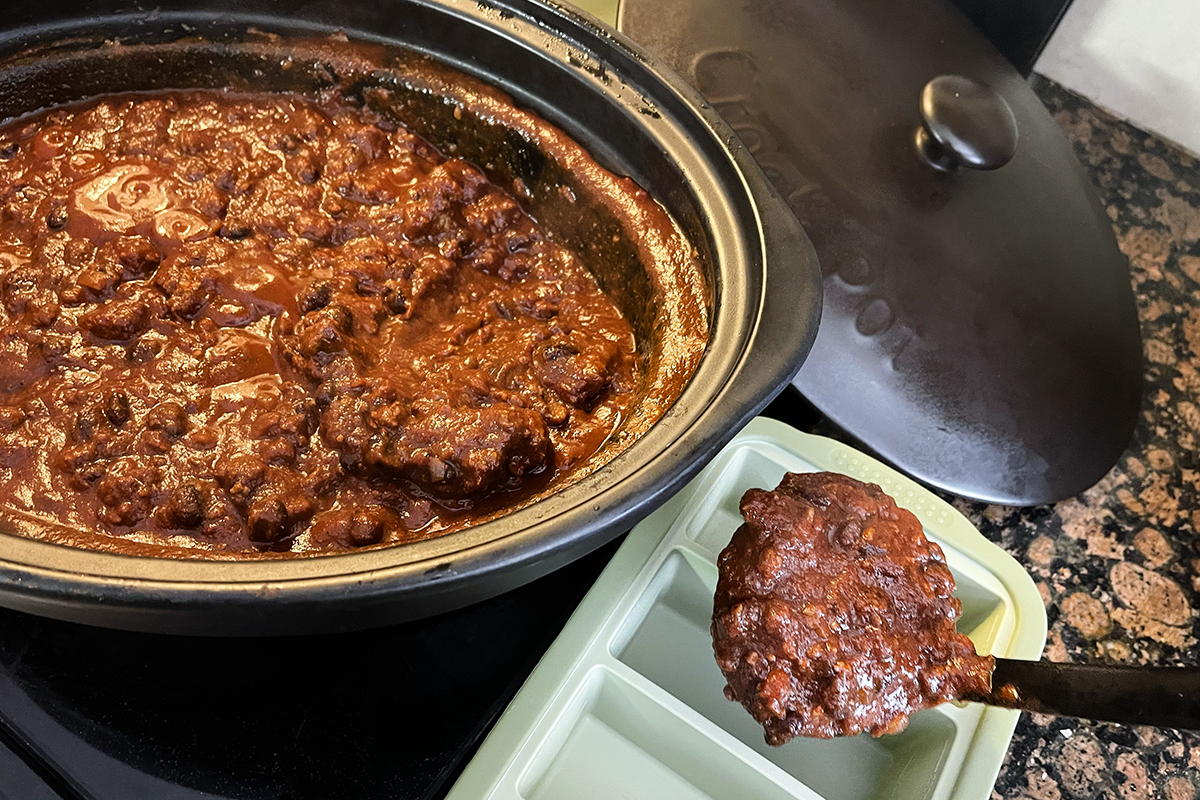
Here’s the version I actually do. I use the slow cooker to cook one big batch of something low and slow, a pot of chicken tortilla soup, a chili, bone broth from a tray of chicken legs, and then I portion the cooked result into Souper Cubes and freeze it in blocks. Cook once, block the output, pull a portion whenever I want it. It’s the same frozen block method I dialed in for the rest of my batch cooking, with the crock pot doing the slow work.
This guide covers both, honestly. I’ll go into why I skip raw dump bags, how the cook-then-block approach works, the one timing trick that makes it painless on a tired night, what blocks up well and what doesn’t, and how long it all really keeps. By the end you’ll have a slow cooker freezer system you can run any week.
What is crock pot freezer meal prep, really?
Crock pot freezer meal prep is making slow-cooker meals ahead of time and freezing them in portions, so a future dinner is just a reheat. There are two ways to do it, and they’re close to opposites.
The first is the dump bag: raw ingredients sealed in a bag and frozen, to be cooked later straight in the slow cooker. One bag, one meal, cooked from cold. The second is the way I work: cook the food first in the crock pot, then freeze the cooked result in standardized portions you mix and match later. One pot, many blocks, already cooked.
Both are freezer meal prep with a crock pot. But they ask completely different things of you and your freezer, and they don’t carry the same risk. The rest of this guide is mostly about the second one, because after 10 years it’s the one I trust.
Why I skip raw dump bags
I skip dump bags for one main reason: cooking raw meat slowly from cold or frozen is the thing you’re not supposed to do in a slow cooker. Frozen meat spends too long thawing in there, which is when bacteria multiply.
It’s the appliance. A slow cooker heats gently, between 170°F and 280°F, which is great for tough cuts and slow for moving frozen food through the danger zone. The other guardrails matter too: thaw in the fridge first, keep the cooker between half and two-thirds full, and start it right away instead of setting it to begin later.
You can make a dump bag safely. You just thaw it fully in the fridge first, which quietly removes the grab-and-go convenience that made it appealing. Cooking from a still-frozen bag is the part to avoid.
Cook-then-block sidesteps all of it. Freezing and reheating food that’s already fully cooked is routine, the same as any leftover. There’s no raw-from-frozen step to get wrong, which is a big part of why I landed here.
How the frozen block method changes crock pot freezer meal prep
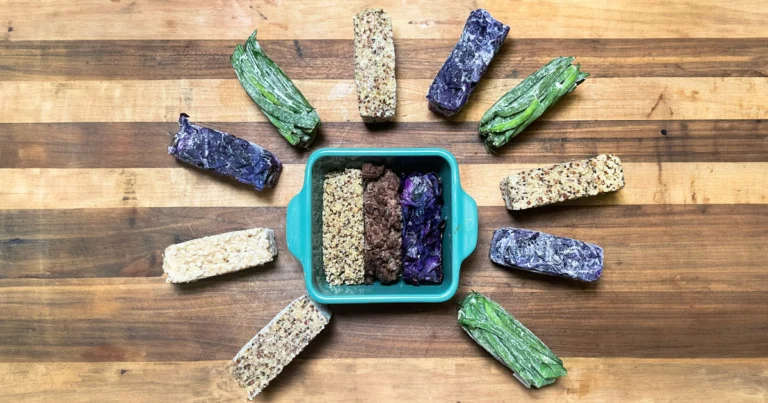
The frozen block method is simple: cook a big batch, portion it into standardized frozen blocks, and mix and match those blocks into meals later. Applied to a crock pot, the slow cooker becomes the thing that makes the batch, and Souper Cubes become the thing that holds the portions.
Component freezing isn’t new, and I won’t pretend I came up with it. What I systemized and named is the part around it: consistent portion sizes, defined categories, and the mix-and-match math that lets one afternoon of cooking feed you for weeks. The crock pot fits that system neatly for a specific set of foods, the wet and slow ones the stove makes you babysit.
So instead of a freezer full of single-meal bags you have to plan around, you get a stack of labeled blocks: a column of chicken tortilla soup, a few cubes of shredded chicken, a brick of chili. Pull what you want, leave the rest.
How do you actually run a crock pot soup session?
Soup is what I make most, and the method barely changes from batch to batch: layer it cold, cook it a few hours, then hold it on warm until I’m ready to cube. The order things go into the pot matters more than most people expect.
Start with the vegetables on the bottom, frozen ones included, since the base of the pot runs hottest and vegetables need the most time. Put the meat on top of them, thawed, not underneath. Meat at the bottom cooks too fast and can turn tough and stringy. Up top it cooks slower and gentler, which is exactly what you want for something you’re going to shred or cube.
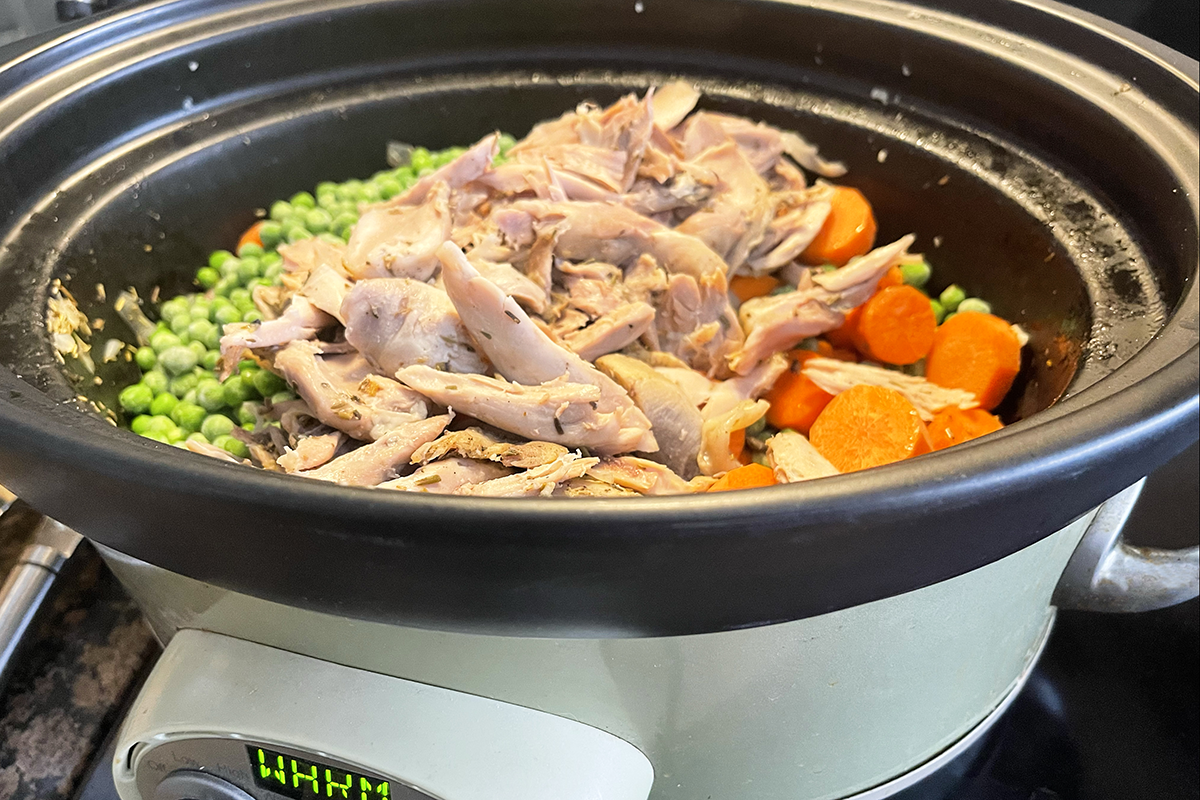
Always add broth, chicken, beef, or vegetable, enough to make it a soup, along with your spices and herbs. The broth is doing two jobs at once: it’s the soup, and if it’s a gelatin-rich bone broth, it’s also what helps everything freeze better later. Keep the pot between half and two-thirds full while you’re at it, which is both the safe range and where a soup cooks most evenly.
Cook it about 4 hours on medium heat, or until the meat is tender and shreddable, then drop it to warm and leave it there until you have the energy to portion. That warm hold is the part worth understanding, so it gets its own section next.
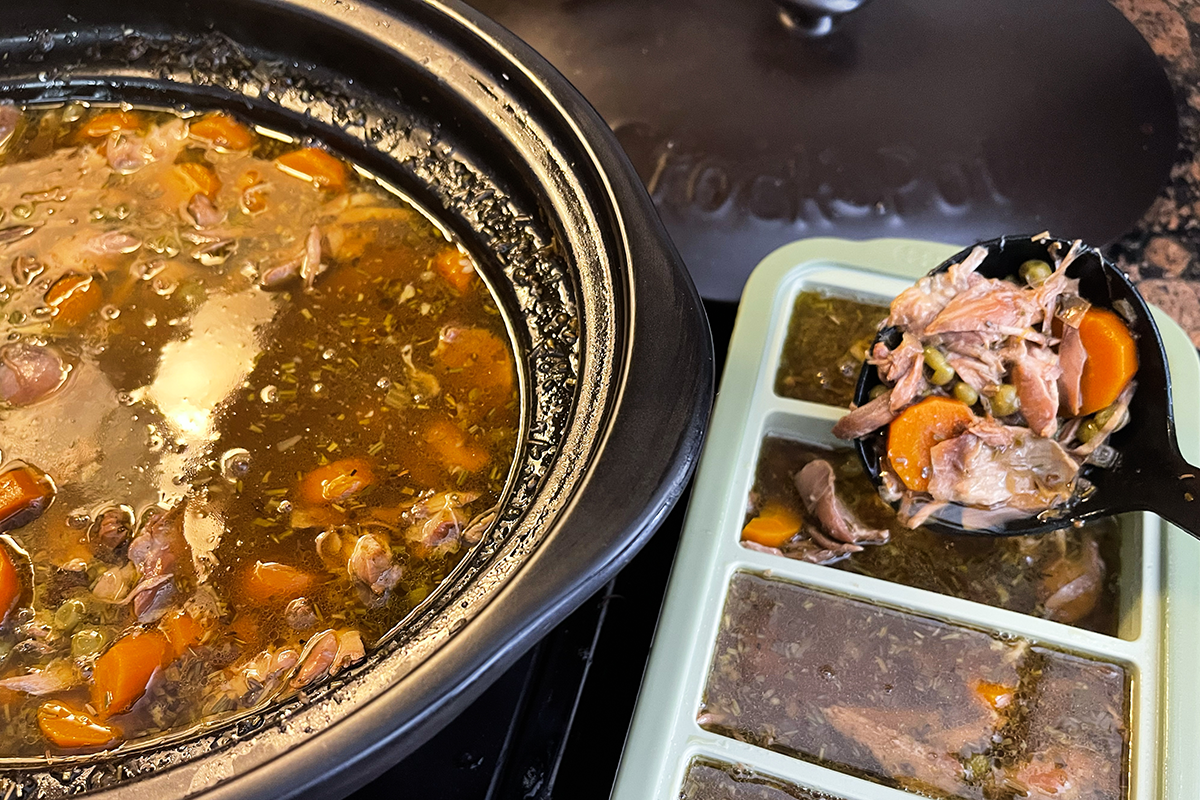
One more thing I learned the hard way: keep fragile vegetables like celery out until the end. If I’m holding the pot on warm for a long stretch, I add them right before I’m ready, so they keep a little crunch instead of going limp.
Can you leave a slow cooker on warm and portion it out later?
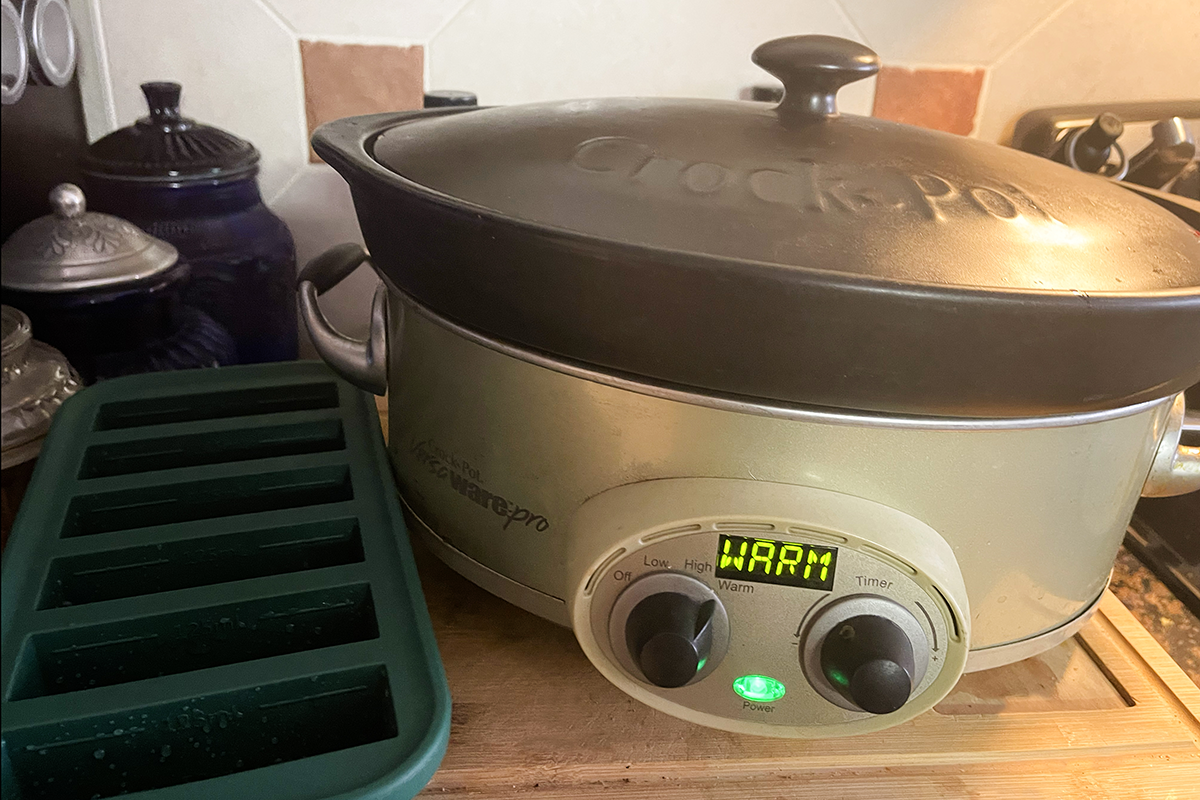
Yes. You don’t have to portion the batch the moment it’s done. Leave it on the warm setting and block it up when you have the energy, even the next morning.
This solved a real problem for me. After a long batch-cooking day, the last thing I want is to stand over a hot pot ladling soup into trays. So I don’t. I flip the cooker to warm, go to bed, and portion it the next day when I’m fresh.
It holds up because warm isn’t cooking, it’s holding. A slow cooker on warm keeps food at or above 140°F, above the danger zone the whole time. The one thing worth doing once is checking that your cooker’s warm setting actually holds 140°F or higher, since models vary.
I’ll vouch for this with soup, stew, and chili, and not much else. Soup is already soft, so a long hold costs it nothing, and a chili or a stew tastes better the longer it sits and the flavors keep melding. For those, the overnight hold isn’t a compromise. It’s an upgrade.
What actually blocks up well from a slow cooker?
The best crock pot freezer foods are wet, sturdy, and forgiving. Anything soupy, saucy, or shreddable freezes and reheats well. These are the ones I reach for, and how I use each:
- Soups and stews. Chicken soup, chicken tortilla soup, minestrone, beef stew, lentil, split pea. The core of the whole system, and what Souper Cubes were practically built for.
- Chilis. Beef, pork, turkey, white chicken. These are the warm-setting champions, better after a long hold than they were the minute they finished.
- Shredded proteins. Pulled pork, salsa or taco chicken, carnitas, barbacoa. Cook it, shred it, block it. Reheats into tacos, bowls, or a quick chili.
- Beans and legumes. A big pot of dried beans, refried beans, lentils, dal. Cheap to make in bulk and they freeze without a fuss.
- Bone broth. From a tray of chicken legs or saved carcasses. This one gives you two outputs from one pot: the broth and the shredded meat off the bones.
- Braises and sauces. Bolognese or ragù, marinara, a coconut curry with the dairy left for later.
- Breakfast. Steel-cut oats overnight was my old standby, wake up and it’s done. Applesauce and apple butter freeze well too.
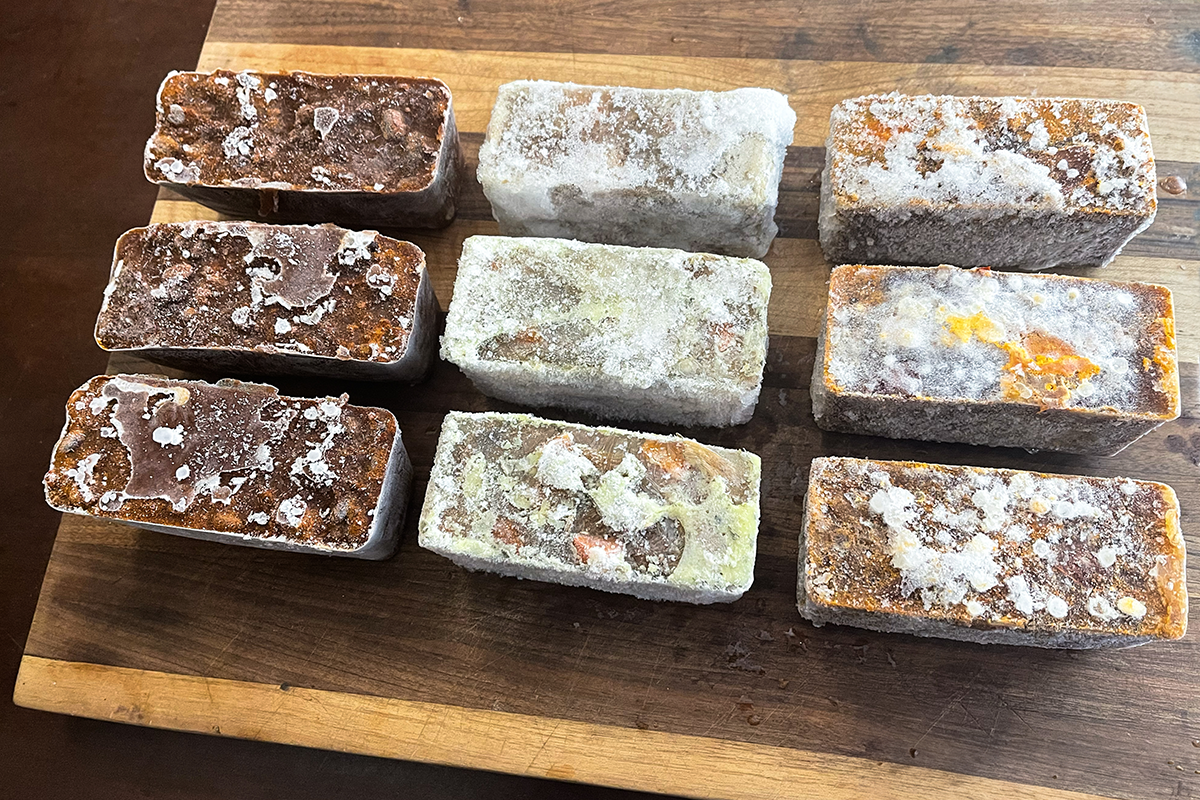
And the things to leave out, which is its own short list. Cream and dairy break and turn grainy in the freezer, the USDA puts cream sauce among the foods that simply don’t freeze well, so add dairy when you reheat, not before. Pasta and noodles go mushy, so add them after thawing. Potatoes turn grainy and rice goes soft, so block those separately or cook them fresh.
Now the part that surprised me, and it’s worth its own note: a good bone broth can actually make creamy dishes freeze better. Bone broth is rich in gelatin, the stuff that makes a batch set like jelly in the fridge, and gelatin is one of the food industry’s quiet stabilizers, used to bind water and emulsify through freeze-thaw. Less free water and smaller ice crystals are exactly what keep a dairy sauce from breaking when it thaws.
This only works if your broth actually gels, the jiggly kind that sets like Jell-O in the fridge. A thin, watery one won’t do much, and getting there is mostly about what you put in and how long you run it.
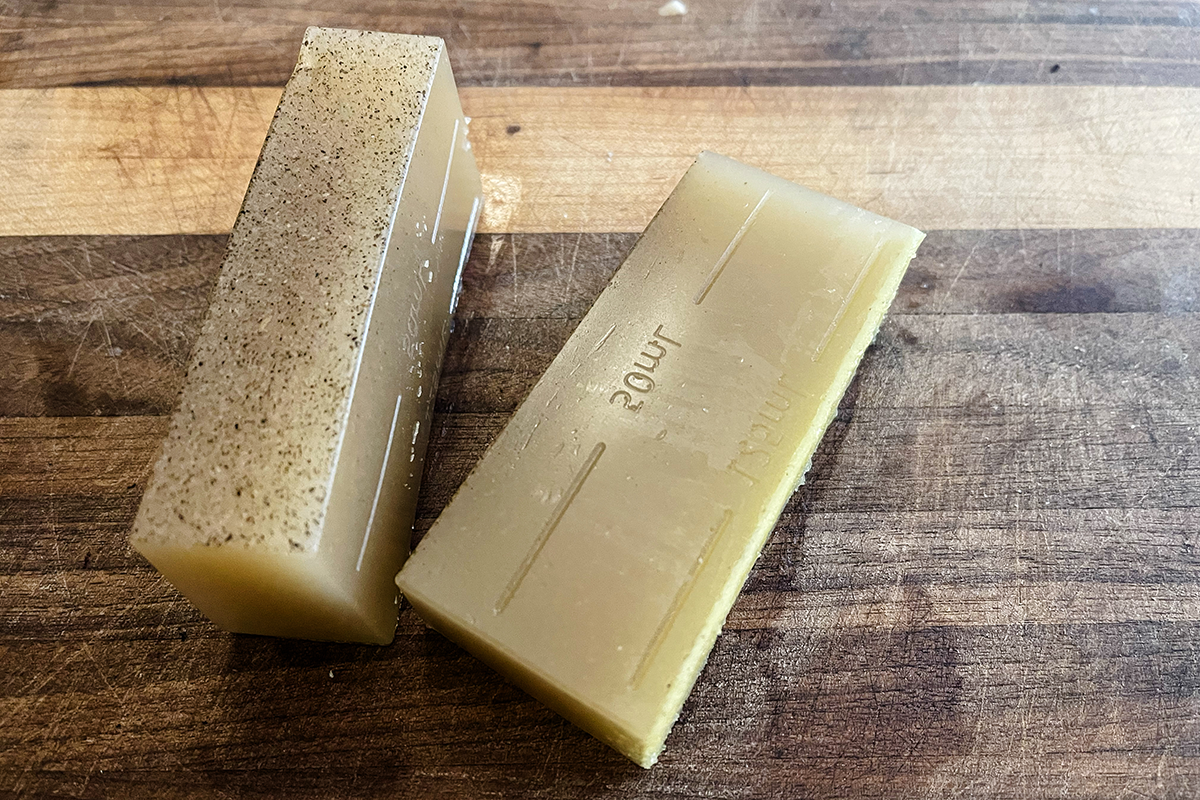
Use collagen-rich parts: chicken feet are the secret weapon, but wings, drumsticks, necks, backs, or a leftover roast carcass all work. Don’t drown them, just enough water to cover, since more water means thinner broth. Add a splash of vinegar, about a tablespoon, to help pull the collagen off the bones. Then run the slow cooker on low for a long stretch, 12 to 24 hours for chicken, longer for beef. When it cools and sets like jelly, you’ve got the gelatin you want.
One honest limit: this reduces dairy breakage, it doesn’t erase it. For a heavy cream dish you’d still go light on the cream or stir it in at reheat. But it means your bone broth pulls double duty, a food on its own and a quiet freezing aid for everything else.
How long do crock pot freezer meals last?
Frozen solid at 0°F, they’re safe to eat more or less indefinitely. Food kept constantly at 0°F stays safe; the time limits you read about are for quality, not safety. The real question is when the texture starts to slip, and for soups and stews I aim to use them within about 2 to 3 months. When you want one, most blocks reheat straight from frozen, no thawing needed.
To reheat, drop a frozen block straight into a pot over low heat with a splash of water or broth, stirring now and then until it’s hot through. The microwave works too: cover it, heat in short bursts, and stir between them so it warms evenly. A single soup block is ready in a few minutes either way.
A few habits make that window longer. Cool the batch before it goes in the freezer. Leave a little headspace in each portion, since liquids expand as they freeze, which is what the fill line on a Souper Cubes tray is for. Freeze in small portions so each block freezes fast and evenly, and label and date every one, because frozen soup all looks the same in February.
That’s the whole craft of it. Cook it right, cool it, portion it, label it, and it’ll be there when you want it.
Frequently asked questions
Frequently asked questions
Can you put frozen meat straight into a crock pot?
Is it safe to leave a slow cooker on warm overnight?
What foods don’t freeze well from a slow cooker?
How long do crock pot freezer meals last in the freezer?
Do I need Souper Cubes, or will any container work?
Crock pot freezer meal prep, the frozen block method way
The crock pot is worth using for one job in a freezer system: the wet, slow foods that are a chore on the stove. Soups, broths, chilis, braises. You cook the batch, hold it on warm if you’re tired, block the result into Souper Cubes, and pull dinner whenever you need it, no raw-from-frozen guesswork.
The piece I’d hold onto is the bone broth. Made low and slow in the crock pot, it hands you broth and shredded meat at once, it’s the flagship Souper Cubes food, and its gelatin quietly helps your creamier blocks freeze better too. One pot, doing three jobs. That’s the kind of thing the frozen block method is built to find.
Start this Sunday
Summarize the key takeaway, connect back to the block system if relevant, and point to one clear next step.
Get the Playbook →


Be the first to leave a comment