
Are Souper Cubes Worth It?
Are Souper Cubes worth it? At about three times the price of cheaper trays, here's exactly who should buy them, who should save the money, and why it comes down to how you cook.
On this page
- TL;DR
- Are Souper Cubes worth it, or should you buy a cheaper tray?
- How much do Souper Cubes cost compared to cheaper trays?
- When are Souper Cubes actually worth the money?
- When should you skip Souper Cubes and buy cheaper trays?
- Do Souper Cubes last long enough to justify the price?
- Are you paying for quality or just the brand name?
- Which Souper Cubes should you buy if you decide they’re worth it?
- Frequently asked questions
- Conclusion
- Start this Sunday
TL;DR
Are Souper Cubes worth it? Worth it if you freeze a lot of soup and liquids, store food right in the tray instead of bagging it, or bake in silicone – the rigidity, the firm lid, and the thick walls all earn their keep there. Skip them if you run high volume, freeze mostly solids, and pop everything into bags the next morning, where a cheaper tray like the GORCI does the same job for about a third of the price (roughly $13.99 versus $39.99 for two 1-cup trays). The deciding factor isn’t the tray, it’s how you cook. My own freezer runs a mix of both.
Are Souper Cubes worth it? They cost about three times what a comparable cheaper tray does, so the honest answer is that it depends entirely on how you cook. For some people that premium is worth every dollar. For others it buys nothing they’ll use. A two-pack of 1-cup Souper Cubes trays runs about $39.99, while a two-pack of 1-cup GORCI trays off Amazon is around $13.99 – the same basic job, freezing food in a portioned block that pops back out, for a third of the price. So the real question isn’t whether Souper Cubes are good. They are. It’s whether the gap is worth it for the way you actually cook.
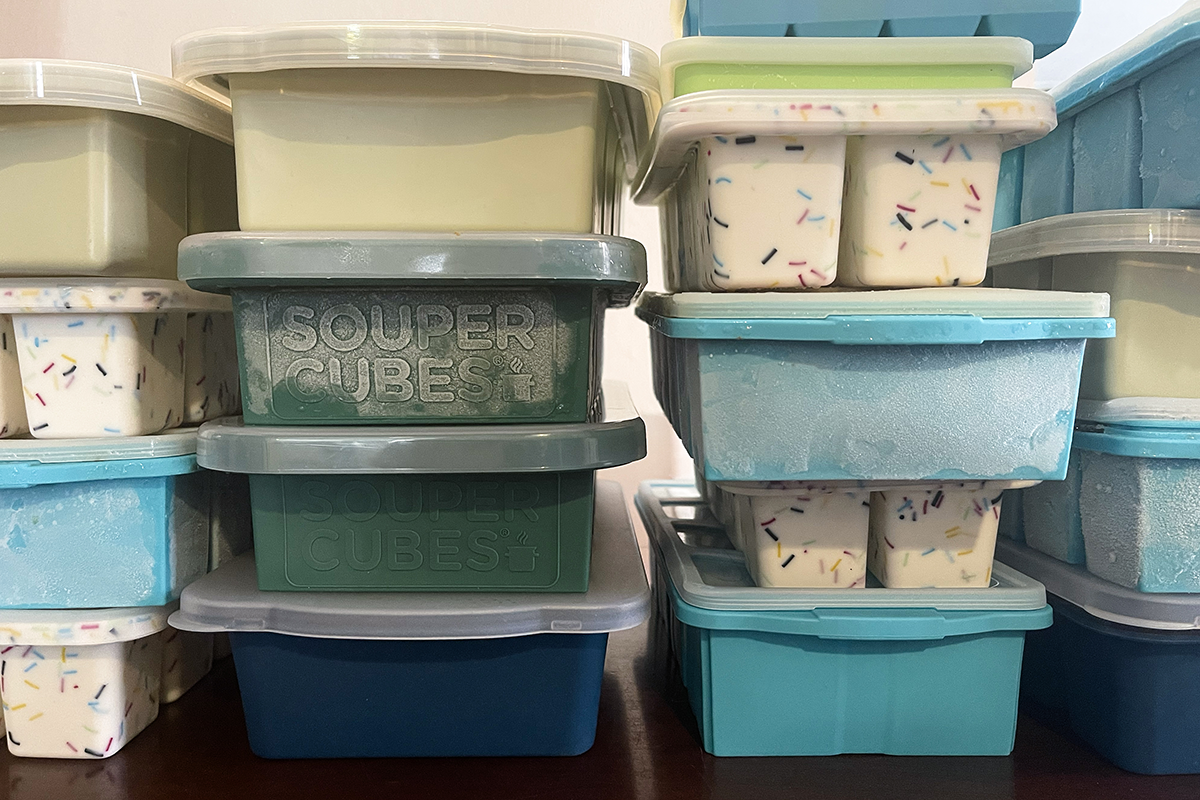
I’ve been batch cooking for ten years, and I own a freezer full of trays across every price point: the Souper Cubes, plus a pile of cheaper ones I use constantly. So this isn’t a pitch. It’s the honest version of the answer I give a friend who texts me before she adds them to her cart. There are real reasons to spend the money, there are real reasons to skip it, and the deciding factor is almost never the tray itself. It’s how much food you make, what you freeze, and whether you store it in the tray or pop it into bags.
This post is the cost-and-value breakdown. If you want the build-quality teardown – how the Souper Cubes tray stacks up against five cheaper trays as an object – that’s the Souper Cubes freezer tray review. If you just want to know how to fill, freeze, and pop them, the how to use Souper Cubes guide covers the routine. Here, I’m answering one thing: should you spend the money?
Are Souper Cubes worth it, or should you buy a cheaper tray?
Souper Cubes are worth it if the experience of using the tray matters to you, if you freeze a lot of liquids, or if you store food in the tray rather than bagging it. They’re not worth it if you run high volume, freeze mostly solids, and pop everything into freezer bags the next morning. In that case the tray is just a mold that’s empty again in a day, and a cheaper one does the same work for a third of the price.
That’s the whole decision in two sentences, but it’s worth slowing down on, because the split surprises people. The premium doesn’t buy you a tray that freezes food better. Every silicone tray freezes a block and lets it go. What the premium buys you is a sturdier object that earns its keep in specific situations, and is overkill in others. The rest of this post is which situation you’re in.
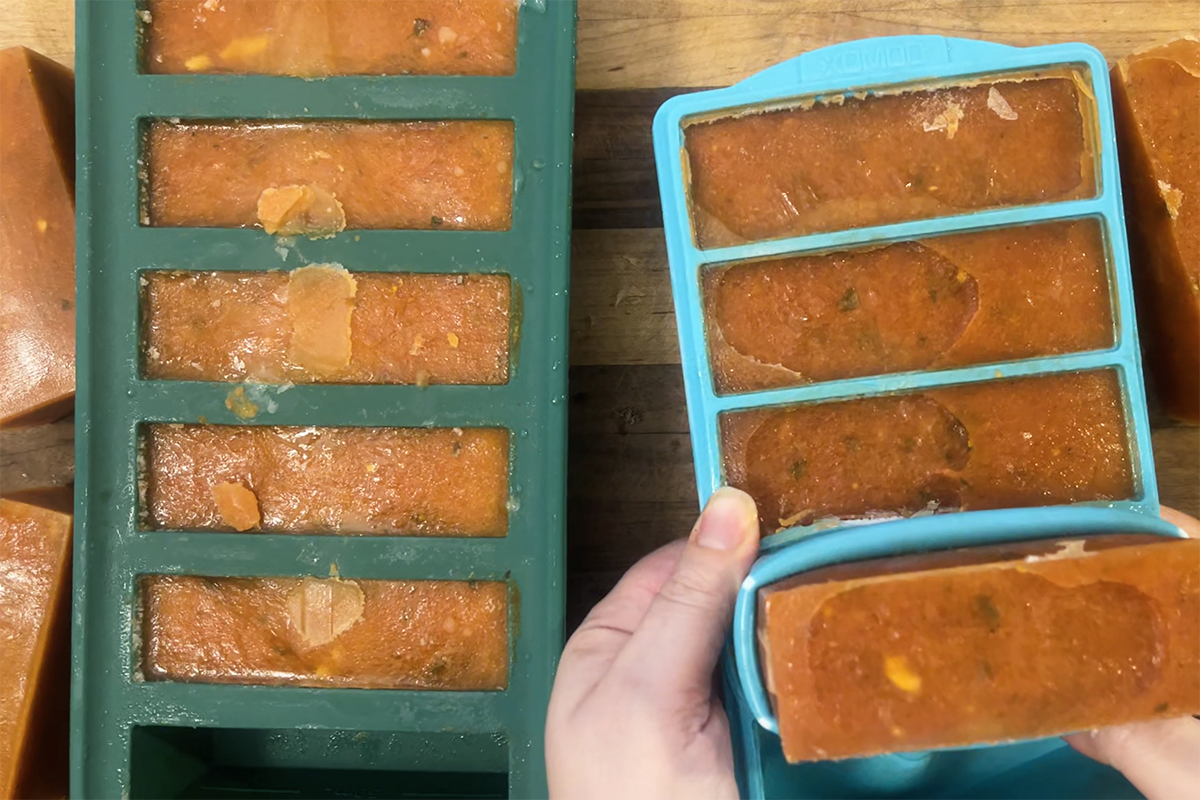
One thing worth saying before the price talk, though: silicone itself is the right material to freeze in, and that’s true of the cheap trays as much as the expensive ones. Two reasons. First, release. You flex a silicone tray and the block pops out clean, no running it under hot water and no chiseling the way you would with a rigid plastic container or an old yogurt tub. Second, water expands as it freezes, and silicone flexes to take that expansion instead of cracking or warping the way a hard container can. So the first honest answer to “what should I freeze portions in” is “a silicone tray,” full stop. Whether that silicone tray needs to be a Souper Cubes is the next question, and that’s the one the rest of this comes down to.
How much do Souper Cubes cost compared to cheaper trays?
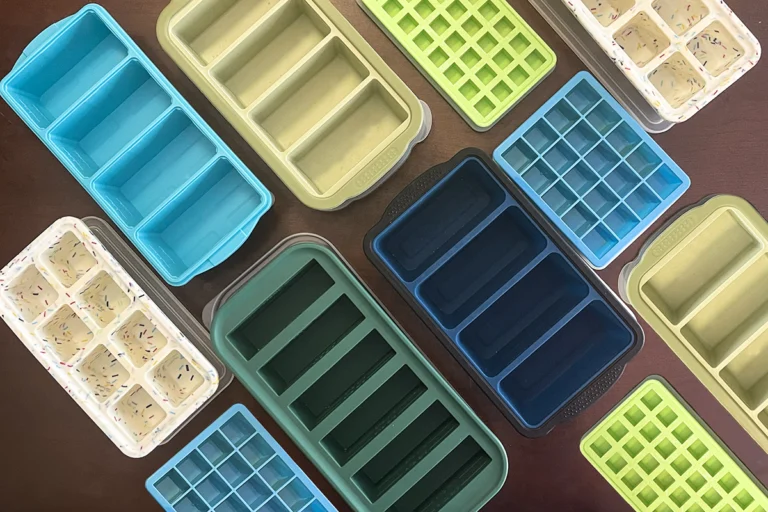
Souper Cubes cost about three times what the cheaper silicone trays do. A two-pack of 1-cup Souper Cubes trays is around $39.99; a two-pack of 1-cup GORCI trays is around $13.99; the XOMOO trays I own a stack of run about $16.99. Prices move around, so check current numbers before you buy, but the shape of the gap is steady: one Souper Cubes tray costs roughly what a two- or three-pack of the budget trays costs.
That gap is the entire reason this question exists. If Souper Cubes were five dollars more, nobody would think twice. At three times the price, you’re making a real choice, and the cheaper trays aren’t junk. The reason they’re cheaper is mostly volume: you get more trays for your money, which is exactly what a high-volume cook wants. The single-tray price is also just lower. Either way, the budget you’d spend on two nice trays buys you a stack of cheaper ones, and for some people that stack is the smarter purchase.
So before you spend $40, it’s worth being honest about what the extra money is actually for. It’s not portioning – every tray has fill lines. It’s not whether the block freezes – they all do that. It’s the lid, the rigidity, and the longevity, and whether those three things matter depends entirely on how you cook.
When are Souper Cubes actually worth the money?
Souper Cubes earn their price in three specific situations: when you freeze a lot of liquids, when you store food in the tray instead of bagging it, and, to a lesser degree, when you bake in silicone. In each of those cases the thicker walls and the better lid do real work. Outside of them, you’re paying for quality you won’t put to use. Here’s each one.
You freeze a lot of soup and other liquids. This is the clearest case. A floppy tray full of broth is a spill waiting to happen on the walk to the freezer, and the cheaper trays are noticeably more flexible. The Souper Cubes tray is stiff. It doesn’t fold or slosh when you carry a full one across the kitchen, so a tray of soup travels like a solid object instead of a wobbling pool. I haven’t had a real disaster with a cheaper tray, but I definitely don’t trust them the same way, especially on the walk out to the garage freezer, where a bend or a slosh means soup on the floor. If you freeze liquids regularly, the sturdier tray is worth it for the confidence alone.
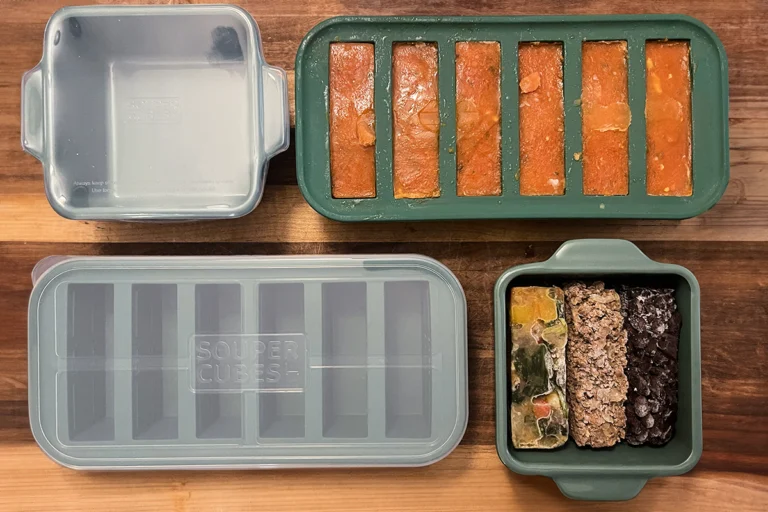
You store food in the tray instead of popping it into bags. If you’re a lower-volume cook who’d rather leave the food in the tray in the freezer than transfer everything to bags, the Souper Cubes is built for that. Souper Cubes says the thick walls and tight-sealing lid hold off freezer burn better, and you can see why that would be true: since freezer burn comes down to air reaching the surface of the food, more silicone and a firmer lid mean less air getting to it. That matters because airtight storage is what protects food quality over a long freeze, and a lid that seats firmly is doing that job every day the tray sits there. A rigid lid is also just less likely to leak or pop loose while it sits in the freezer for weeks. The cheaper lids run the full range here – the GORCI’s is decent, the XOMOO’s is super floppy but still works – and Souper Cubes makes the best of them. If the tray is where your food lives, that lid is doing its job the whole time, not just for the two minutes you carry it.
You bake in silicone. This one’s smaller, and I’ll be straight that it’s not my habit – I’m just not a fan of baking with silicone, so I don’t do it. But if you do, and you want to bake or reheat a block right in the tray, I’d feel better doing it in the Souper Cubes than in a flimsier tray. The build is more reassuring under oven heat. So I mention it as a real reason if baking in silicone is your thing, not as a reason I’d personally buy them.
When should you skip Souper Cubes and buy cheaper trays?
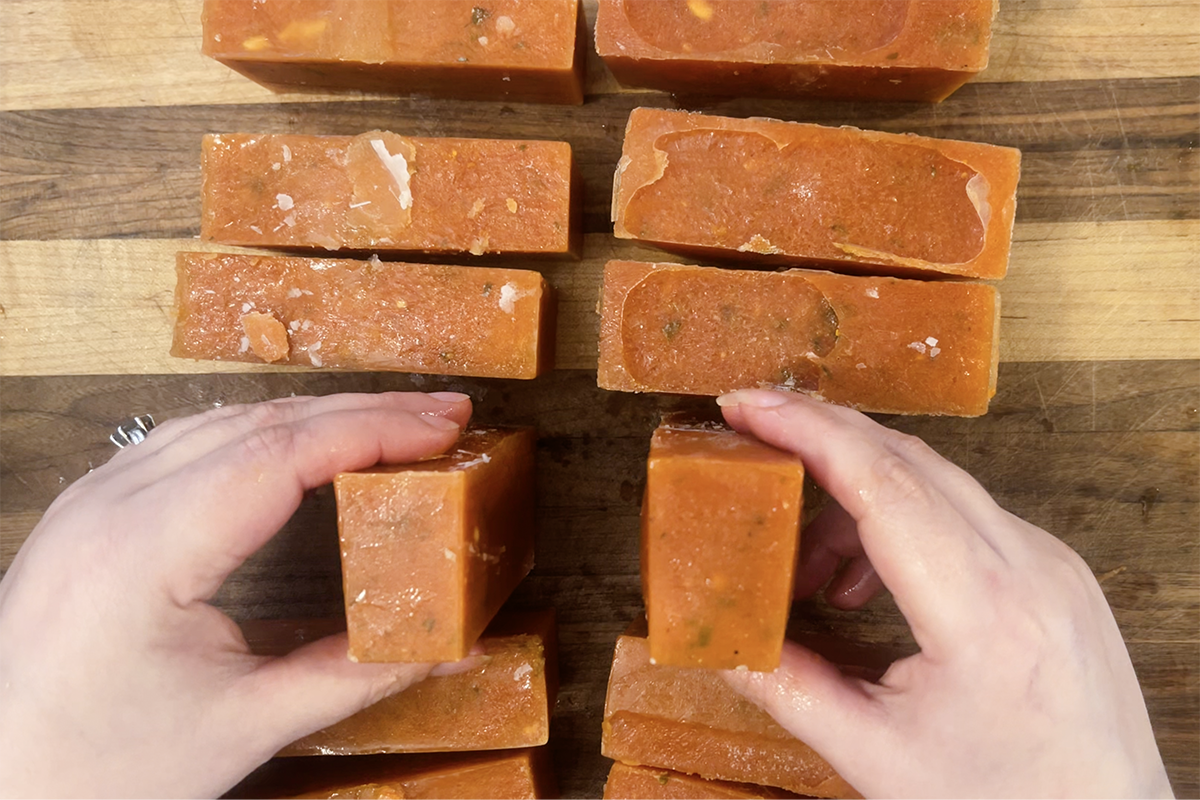
Skip Souper Cubes if you run high volume, freeze mostly solids, and bag everything. If you’re cooking big batches and popping blocks straight into freezer bags the next morning, the tray is empty again within a day and goes right back to work. At that point you don’t need a $20 tray to make a brick – you need a lot of trays, and the cheaper ones get you there for less. The money is better spent on more trays and more freezer bags than on a premium you’ll never feel.
If that’s you, the cheaper tray I’d actually stand behind is the GORCI. Of the budget trays I’ve used, it’s the one that doesn’t feel cheap: the walls are decent, the lid is genuinely fine, and at around $13.99 for two 1-cup trays you’re getting most of the function for a third of the price. The flimsier trays, like the XOMOO, still work for solids – I have a pile of them and use them – but I wouldn’t trust their lids with soup. For frozen blocks of chili, cooked grains, or ground beef that go into a bag the next day, almost any tray is fine, and the cheap ones are the smart buy.
The honest test is simple: picture your normal week. If most of what you freeze is solid, and most of it ends up in bags, your money goes further on a stack of budget trays. The Souper Cubes premium is real, but it’s a premium for things you wouldn’t be using.
Do Souper Cubes last long enough to justify the price?
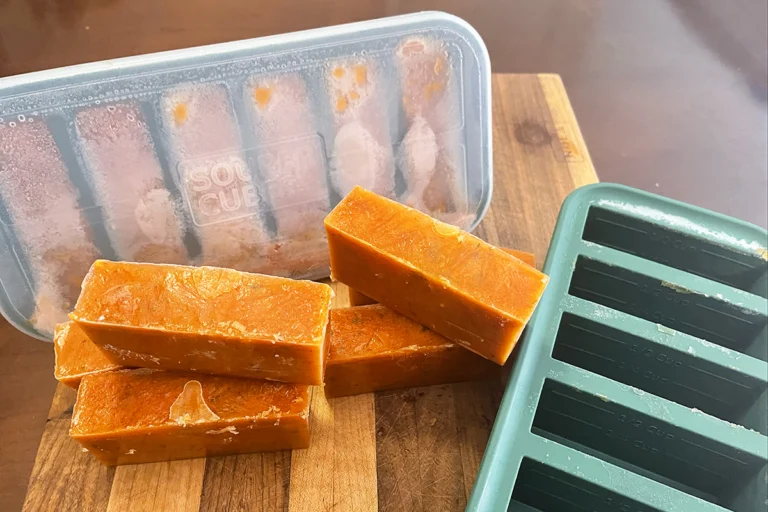
Yes – durability is the place the price actually softens over time. A silicone tray with a steel rim is a tough little system, and I haven’t worn one out, cracked a rim, or torn a cavity across years of regular dishwasher cycles. Release has stayed clean too: a frozen block still pushes out from the bottom without chiseling. Souper Cubes also backs the trays with a lifetime warranty, which the no-name trays don’t.
That reframes the sticker price a little. A tray you use weekly for years isn’t really a $20 purchase; it’s a couple of dollars a year. The catch is that the same durability math applies to the better cheaper trays – a GORCI you use for years is cheap and long-lived. So longevity is a reason Souper Cubes are worth it in absolute terms, but it’s not a reason they beat a good budget tray on value. Both last. One just costs more up front.
Are you paying for quality or just the brand name?
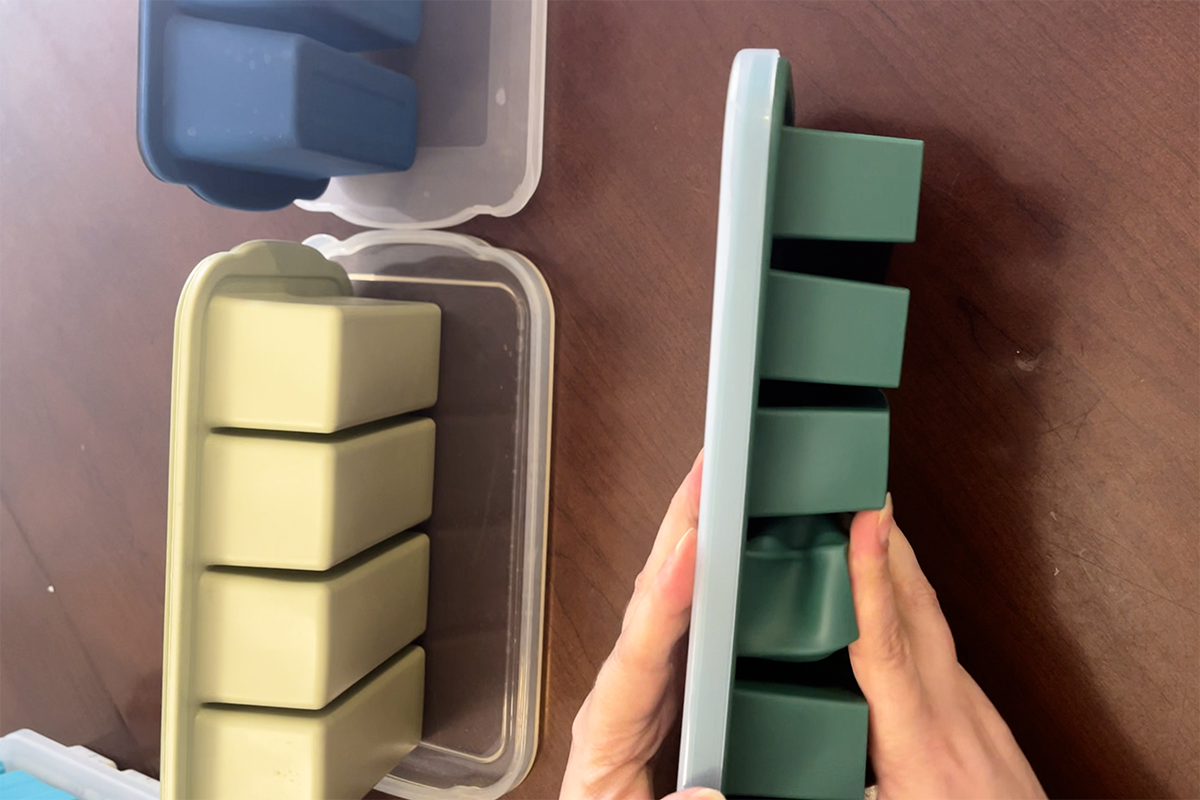
You’re paying for both, and that’s a fair trade as long as you know it. The quality is real: handle a Souper Cubes tray next to a cheaper one and the difference isn’t subtle. Thicker walls, the sturdiest lids of any tray I own, and a rigidity the budget trays don’t match. That part isn’t branding, it’s the object.
You’re also paying for the peace of mind that comes with an established brand. Souper Cubes is a known company with a lifetime warranty, food-grade platinum silicone and a steel-reinforced rim rated oven-safe to 415°F, and a long track record, and a lot of people simply feel safer buying that than a no-name tray, even when the cheaper one lists the same specs. That feeling is worth something – it’s just worth being clear-eyed that some of your $40 is buying confidence as much as silicone. Whether that’s a good use of the money is a personal call, and for plenty of people it genuinely is.
Which Souper Cubes should you buy if you decide they’re worth it?
If you’ve decided they’re worth it, start with the 1-cup tray, or the 1/2-cup if you mostly freeze single components. The 1-cup holds a full portion of soup, chili, or sauce – the liquids where the sturdy tray pays off most. The 1/2-cup is the workhorse for protein, carb, and vegetable blocks if you build meals from components. You don’t need the full lineup to start; one tray of the right size is enough, and the collection tends to grow on its own once the habit sticks.
One thing to know going in: Souper Cubes doesn’t make a 1/4-cup tray. If you want that size – handy for smoothie portions – you’ll be buying a different brand for that one slot regardless. It’s the single place where the alternative isn’t a compromise; it’s the only option. For the full sizing rundown and what each tray does in practice, the how to use Souper Cubes guide goes deeper.
Frequently asked questions
Frequently asked questions
Are Souper Cubes worth the money?
Why are Souper Cubes so expensive?
What is a good cheaper alternative to Souper Cubes?
Are Souper Cubes better for freezing soup?
Conclusion
So, are Souper Cubes worth it? They’re worth it for the soup-and-liquids cook, the store-it-in-the-tray cook, and the silicone baker, because in those situations the rigidity, the lid, and the thick walls all do real work. They’re not worth it if you run high volume and bag everything, where a cheaper tray like the GORCI does the same job for a third of the price. For what it’s worth, my own freezer is a mix – the Souper Cubes and a stack of cheaper trays, each pulled for the jobs it’s best at. That’s the honest answer: not one tray for everyone, but the right tray for how you actually cook. If you’re building a freezer system around portioned blocks, that’s the frozen block method, and it’s free in the Frozen Block Method Playbook.
Start this Sunday
Summarize the key takeaway, connect back to the block system if relevant, and point to one clear next step.
Get the Playbook →
Be the first to leave a comment